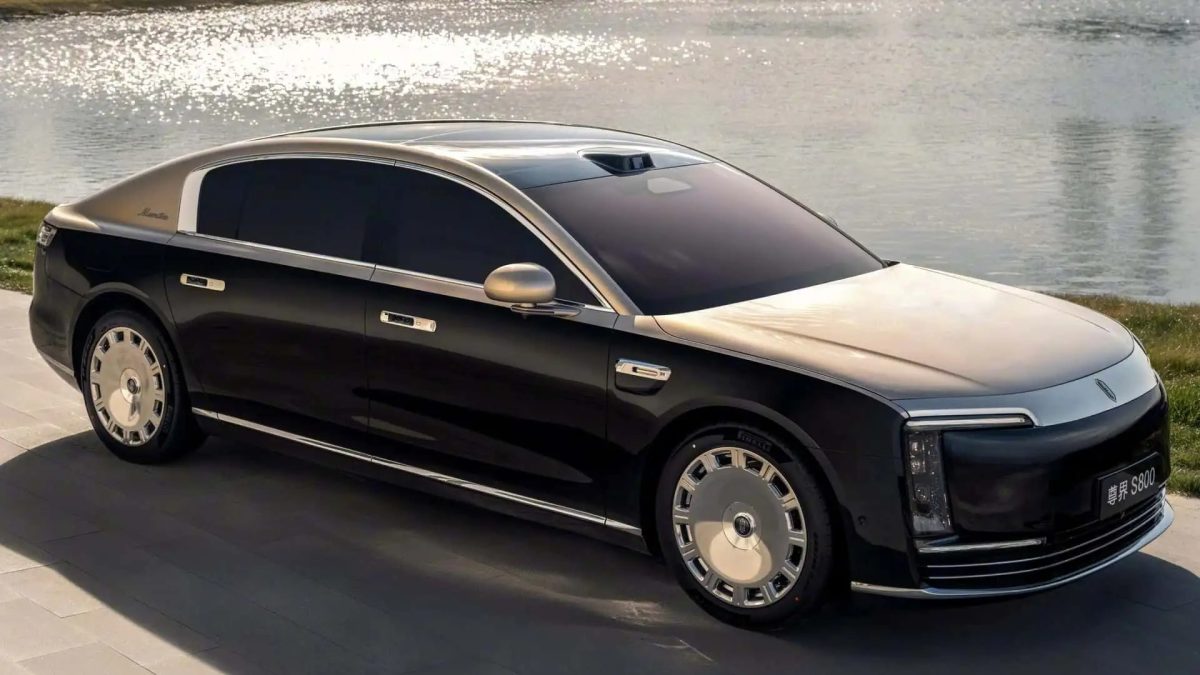
The Maextro S800 is rewriting the rules in China’s ultra-luxury segment.
Since its May debut, the Huawei-backed sedan has dominated sales above $100,000, leaving established players like Porsche and BMW scrambling in its wake.
November numbers tell the story. The S800 delivered 2,145 units, more than the Panamera’s 1,200 and the 7 Series’ 928 combined.
That marks three consecutive months at the top since September, when the sedan first overtook every competitor in its price bracket.
Developed jointly by Huawei Technologies and state-owned Anhui Jianghuai Automobile Group, the S800 starts at $100,000 and climbs to $145,000 for the top spec.
The Panamera begins at $156,000 in China, making the Maextro significantly cheaper while delivering comparable luxury.
Richard Yu, chairman of Huawei’s consumer business group, called it a breakthrough moment.
The S800 represents the first time a Chinese brand has gained a real footing in the one-million-yuan ultra-luxury segment.
He credits smarter technologies and innovation in the intelligence and electrification era for the success.
Huawei conquered one of the last corners foreign brands held as a stronghold.
Global automakers ceded their lead in mainstream vehicles years ago and keep sliding further behind local companies in the world’s biggest auto market.
The changing demands of Chinese customers and growing pride in domestic brands have completely upended the luxury market.
The S800 name plays on the Italian word for conductor. Details rarely seen in Chinese cars set it apart. Seat adjustment buttons are made of crystal.
A starry headliner uses more than 680 optical fibers to conjure a night sky effect like a Rolls-Royce.
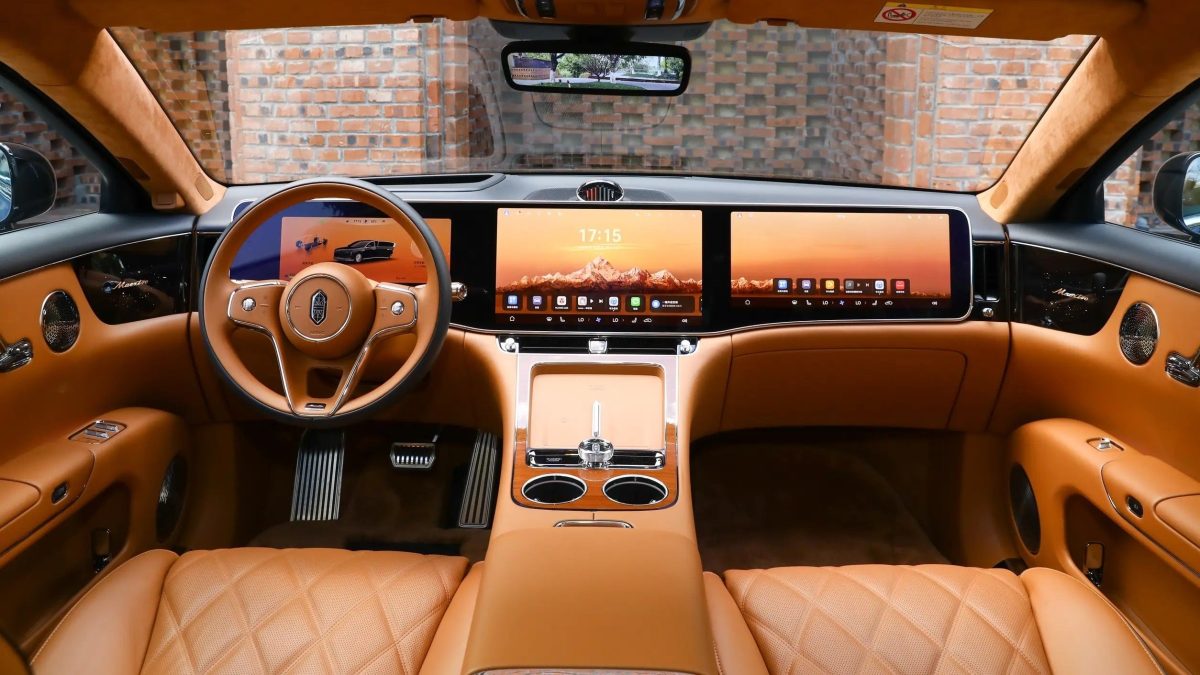
The cabin features a triple-screen dashboard, a 40-inch rear movie projector, over 30 sensors, and doors that open automatically.
Both pure electric and extended-range editions are available. China’s luxury segment was previously dominated by international marques producing mainly petroleum-powered vehicles.
Around 60 per cent of new cars sold to mainland customers now are either battery-powered or plug-in hybrid models.
This isn’t Huawei’s first automotive hit. The Aito M9 SUV became China’s best-selling luxury vehicle above $71,000 within six months of its late 2023 launch.
Prior local attempts at cracking ultra-luxury failed. BYD’s Yangwang launched vehicles exceeding one million yuan, like the U8 SUV, but never matched established player volumes.
Huawei entered automotive in 2019, focusing on electrification, autonomous driving, and digital cockpits.
The company positions itself as a technology supplier rather than carmaker, partnering with manufacturers who handle production while Huawei provides high-end software, driver assistance systems, and its vast sales network.
The S800’s success bolsters Chinese carmaker confidence in challenging Mercedes and BMW at premium price points.