Across its entire stable of brands, VW has now sold 4 million battery electric vehicles since launching its first, the little e-Up city car, back in 2013. That’s 13 years of building EVs to reach a number that BYD, the world’s largest EV manufacturer, managed to sell more than half of in 2025 alone (2.2 million units). Tesla, for all its recent troubles, has shifted roughly 8.5 million EVs since inception. The context writes itself.
Where VW’s EVs are actually selling
Europe does the heavy lifting. Around 68 percent of VW Group EV sales, roughly 2.7 million vehicles, have landed in European markets. That makes sense when you consider brands like Skoda and Cupra are massive on the continent but barely register elsewhere. China and the US account for just 20 percent and 8 percent respectively, with the rest of the world picking up the remaining 5 percent.
The ID.4 and its coupe sibling the ID.5 sit comfortably at the top of VW’s EV sales chart with about 901,000 units between them since 2020. The ID.3 follows with around 628,000, and the Audi Q4 E-Tron rounds out the top three at 387,000. The Porsche Taycan, sitting in sixth spot with 177,000 sales, has actually outsold several of VW’s more affordable EVs, which tells you something about where the early EV demand has come from.
America is barely in the picture
That 8 percent US figure is striking for a group that includes Volkswagen, Audi, Porsche, and Lamborghini. Roughly 320,000 EVs sold across all those brands in the world’s second-largest car market over 13 years. For context, Tesla sold more than that in the US in a single quarter at its peak.
It’s not getting easier, either. The ID Buzz and Audi A6 E-Tron have both skipped a model year in the US, and the ID.7 sedan has been cancelled for North America altogether. When a manufacturer starts pulling models from your market, it’s a pretty clear signal about where you sit in the priority list. American EV buyers who aren’t shopping Tesla are increasingly looking at Hyundai, Kia, BMW, and Mercedes, not VW.
The China problem isn’t going away
This is where VW’s celebration gets complicated. China is the world’s biggest EV market, and domestic brands now have a stranglehold on it. VW’s response has been developing China-specific EVs through local partnerships, but early signs aren’t encouraging. The China-only AUDI sub-brand (yes, that’s a separate thing from regular Audi, styled in all-caps) has had a sluggish start, suggesting that even purpose-built local products don’t guarantee traction when you’re competing with BYD, Geely, and the rest of the Chinese pack on their home turf.
The affordable push is a European story
VW’s near-term plan centres on getting cheaper EVs into European showrooms. Four small, affordable models are due in 2026: the VW ID Polo and ID Cross, the Cupra Raval, and the Skoda Epiq. Further down the track, there’s a city car previewed by the ID Every1 concept, an EV revival of the Audi A2, and eventually an all-electric ninth-generation Golf.
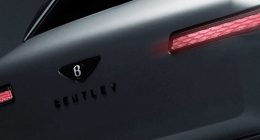
At the top end, the electric Porsche Cayenne is incoming, along with Bentley’s first full EV.
None of the affordable stuff is earmarked for the US. Americans who want a cheap EV from VW are going to be waiting a while, if it ever comes at all. The political headwinds around EV mandates, shifting incentive structures, and softening demand mean North America likely doesn’t figure heavily in VW’s short-term electric plans.
The DMARGE take
The 4 million milestone is real and worth acknowledging. But in an industry where BYD is shipping over 100,000 vehicles a month to overseas markets and Tesla has doubled VW’s lifetime total, the celebration feels less like a victory lap and more like a progress report. For American buyers specifically, VW’s EV story has been one of false starts and pulled products. Until that changes, the group’s electric ambitions remain largely a European affair.