Ninth-generation workhorse adds battery power and Cyber Sumo styling but diesel remains the real story.
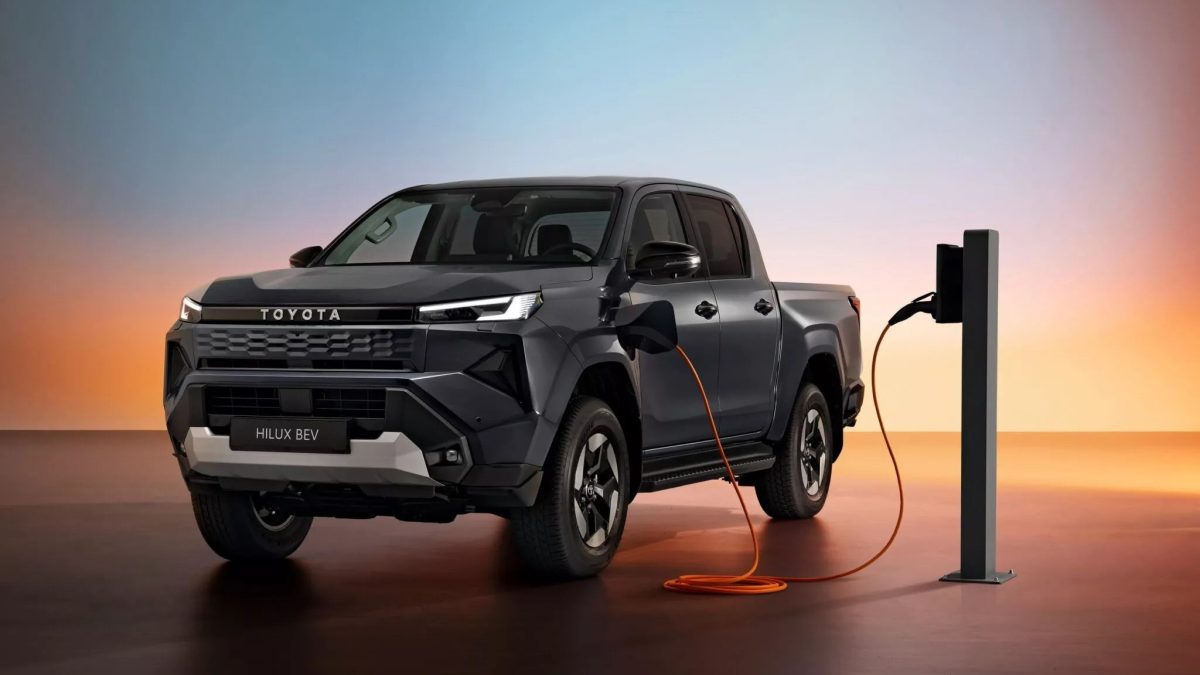
Toyota rolls out its ninth-generation Hilux, bringing an unexpected first for the nameplate.
An electric version leads the charge, literally, though diesel power still anchors the lineup for buyers who actually need to tow stuff.
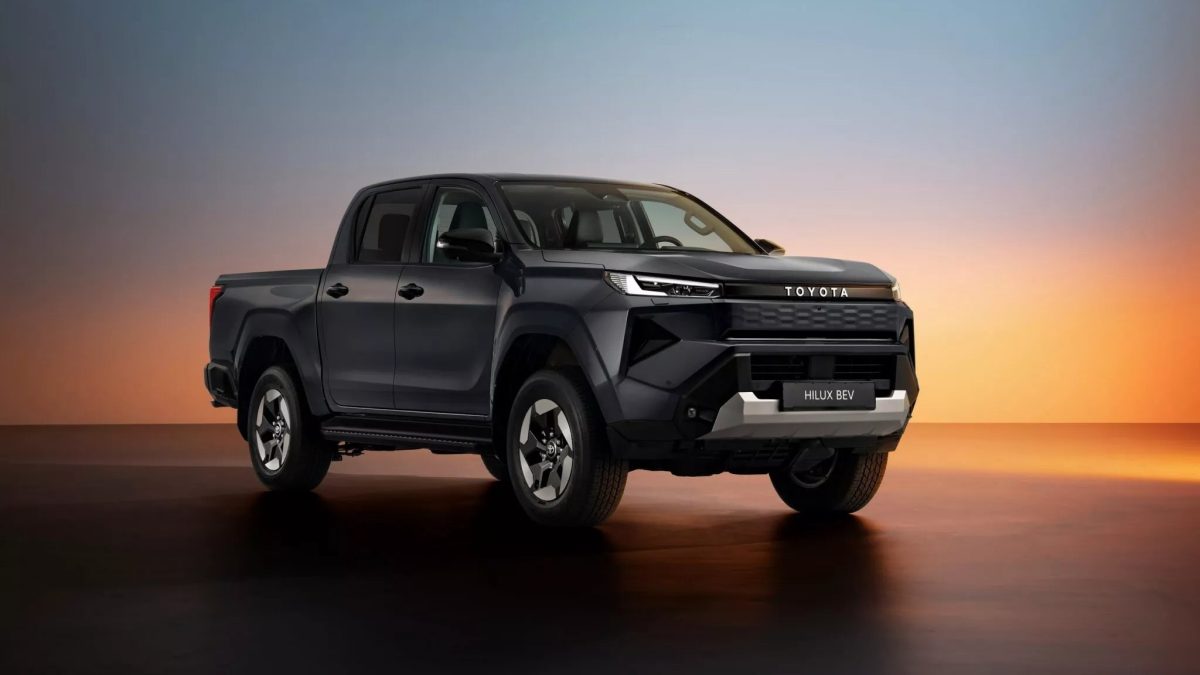
The new design language goes by Cyber Sumo, ditching the hammerhead look for slimmer LED headlights flanking a honeycomb grille.
Angular bumpers and boxy wheel arches give it proper truck presence. The EV wears a closed grille up front because of physics, while combustion models get traditional cooling vents.
The interior has undergone a complete overhaul. Twin 12.3-inch screens dominate the dash, the borrowed steering wheel comes straight from the Land Cruiser parts bin, and crucially, physical buttons remain for climate and audio controls.
No touchscreen fumbling when you’re covered in work site dust.
The electric Hilux runs dual motors making 193 horsepower from a 59.2 kWh battery pack.
Range hits 149 miles under WLTP testing, which sounds modest until you remember most work trucks rarely venture beyond job sites.
Payload drops to 1,576 pounds and towing maxes at 3,527 pounds with the battery setup.
Here’s where reality kicks in. The 2.8-litre turbodiesel with mild hybrid tech hauls 2,205 pounds of payload and tows 7,716 pounds, more than double what the EV manages.
Toyota knows this, which explains why they expect diesel to outsell everything else in Europe by massive margins.
Eastern European markets get non-electrified 2.7-litre gasoline engines too. Toyota’s multipathway strategy means buyers pick what works rather than getting forced into whatever’s trendy.
The company even promises hydrogen fuel cell variants arriving in 2028, proving they’re committed to every powertrain imaginable.
The dual cab configuration dominates Europe and Australia, though Thailand keeps single cab and smart cab variants alive.
Production stays centred in Thailand, where diesel versions already hit showrooms starting around $23,700. The electric model commands $46,000, positioning it as a flagship rather than a volume seller.
Underneath sits an upgraded IMV ladder frame rather than the TNGA-F architecture from Tacoma and Land Cruiser.
New electric power steering debuts in Western Europe while Eastern markets stick with hydraulic systems. Revised suspension offers two calibrations for either heavy-duty work or daily comfort.
European deliveries start December 2025 with broader Asian rollout through 2026.
Japan gets the truck by mid-2026, though American buyers shouldn’t hold their breath since Tacoma already owns that space.