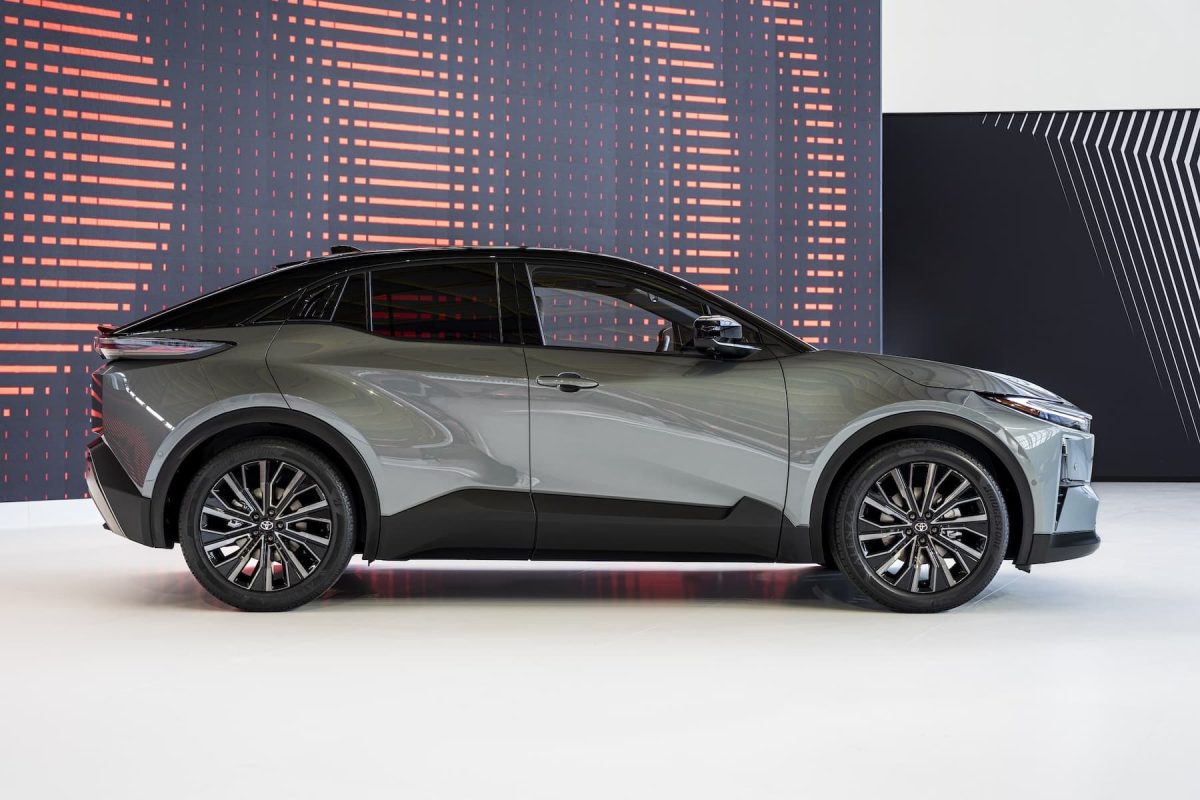
Toyota’s second electric vehicle builds on a new platform designed specifically for battery electric models.
The C-HR+ shares little more than design and badge with its hybrid sibling.
It’s based on fresh architecture that also underpins the refreshed bZ4X. Three powertrain configurations give buyers a real choice.
The base model uses a 57.7 kWh battery pack with a single 123 kW motor driving the front wheels.
Range hits 456 kilometers on 18-inch wheels with a zero to 100 km/h time of 8.4 seconds.
The mid-range version keeps front-wheel drive but bumps the battery to 77 kWh usable and motor output to 165 kW.
That setup delivers 609 kilometers of range on 18-inch wheels, the first Toyota EV to crack the 600-kilometer barrier. Sprint time improves to 7.3 seconds. Optional 20-inch wheels drop range to 563 kilometers.
The flagship model adds a rear motor for all-wheel drive capability.
Combined output reaches 252 kW with an extra 170 Nm of torque from the rear motor. Zero to 100 km/h happens in 5.2 seconds.
Range settles at 546 kilometers on 18-inch wheels or 505 kilometers with 20-inch wheels.
All models charge at 150 kW DC maximum and 11 kW AC standard. The all-wheel drive version can be optioned to 22 kW AC charging.
Battery pre-conditioning and a standard heat pump address the range and charging issues that plagued the bZ4X at launch.
A 10 to 80% charge takes around 30 minutes even in cold conditions.
Energy consumption tested at 15.1 kWh per 100 kilometers on the front-wheel drive 77 kWh model, impressive for a near two-tonne EV.
The wheelbase stretches 110 millimeters longer than the hybrid C-HR and sits just 100 millimeters shorter than the bZ4X.
Rear legroom is above average though headroom gets limited by the coupe-like roofline.
Boot capacity starts at 416 liters across all models, not far off the bZ4X’s 452 liters.
The cabin uses high-quality materials, but the black-on-black color scheme feels dour.
A 14-inch touchscreen pairs with a 7-inch digital instrument cluster. Both look slightly plonked into place.
Standard equipment includes wireless Apple CarPlay and Android Auto, dual-zone climate control, heated front seats and steering wheel, 64-color ambient lighting, and 18-inch alloy wheels.
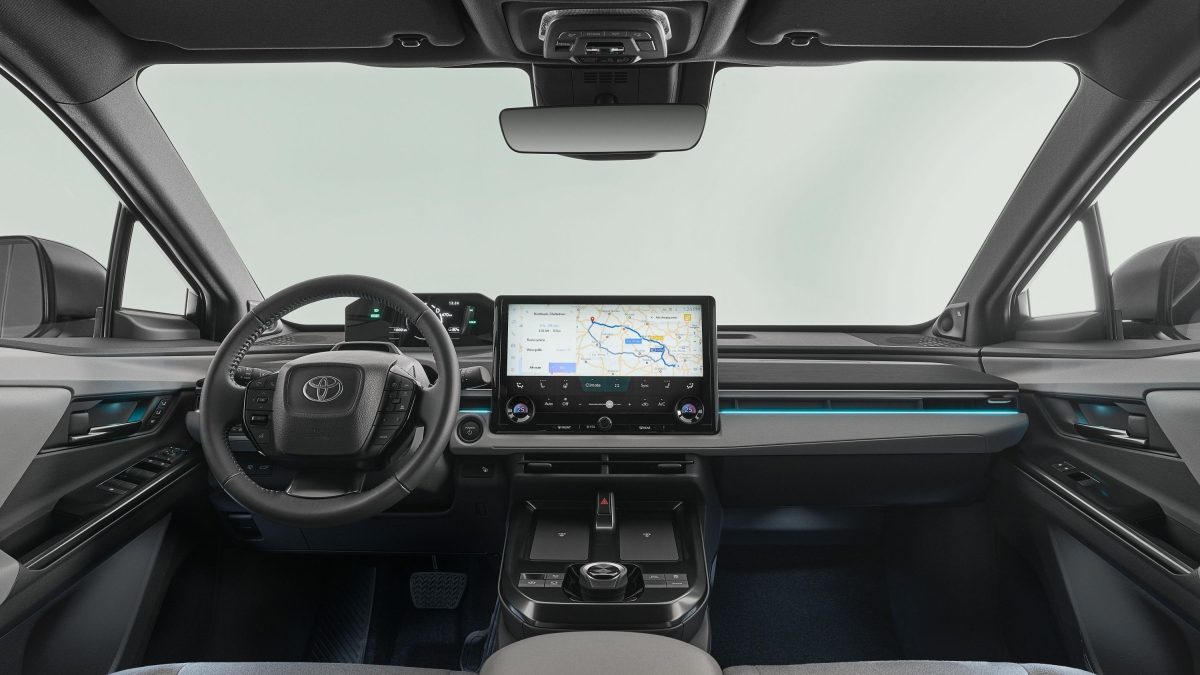
Higher grades add 20-inch wheels, dual wireless charging pads, and a nine-speaker 800-watt JBL audio system with a 9.0-inch subwoofer.
Safety kit includes adaptive high beams, blind spot monitoring, parking support brake, and autonomous emergency braking.
Pricing is expected to slot between the hybrid C-HR range at $28,000 to $36,000 and the bZ4X at $43,000 to $48,000.
That suggests $32,500 to $42,250 before on-road costs. Spring 2026 arrival timing is locked in.
Toyota offers a five-year unlimited-distance warranty extendable to seven years for the powertrain with annual servicing.
The battery pack gets an eight-year performance guarantee, maintaining at least 70 percent of its initial capacity.
Battery warranty runs five years, extendable to 10 years with annual checks. Service intervals are every 12 months or 15,000 kilometers.
The C-HR+ represents Toyota’s most cohesive electric car yet. It doesn’t set class benchmarks for range, charging speed, or digitalization.
But it offers practical capability, comfortable cruising, and excellent noise insulation at expected competitive pricing.