For the better part of two years, the Caterpillar pickup truck has been one of the internet’s favourite automotive fever dreams. AI-generated images flooded TikTok and Facebook showing muscular, yellow-and-black trucks with CAT badges and specs that read like a tradesman’s wish list. A 500 HP diesel V8. 1,000 lb-ft of torque. A split tailgate. An integrated winch. Pricing from $65,000.
None of it was real. But the enthusiasm was very much there.
Thousands of enquiries reportedly poured in from contractors, equipment owners, and blokes who just wanted a truck that looked like it could survive a building site and still turn heads at the pub. The demand signal was impossible to ignore, and Caterpillar, to its credit, didn’t ignore it.
What CAT Actually Built
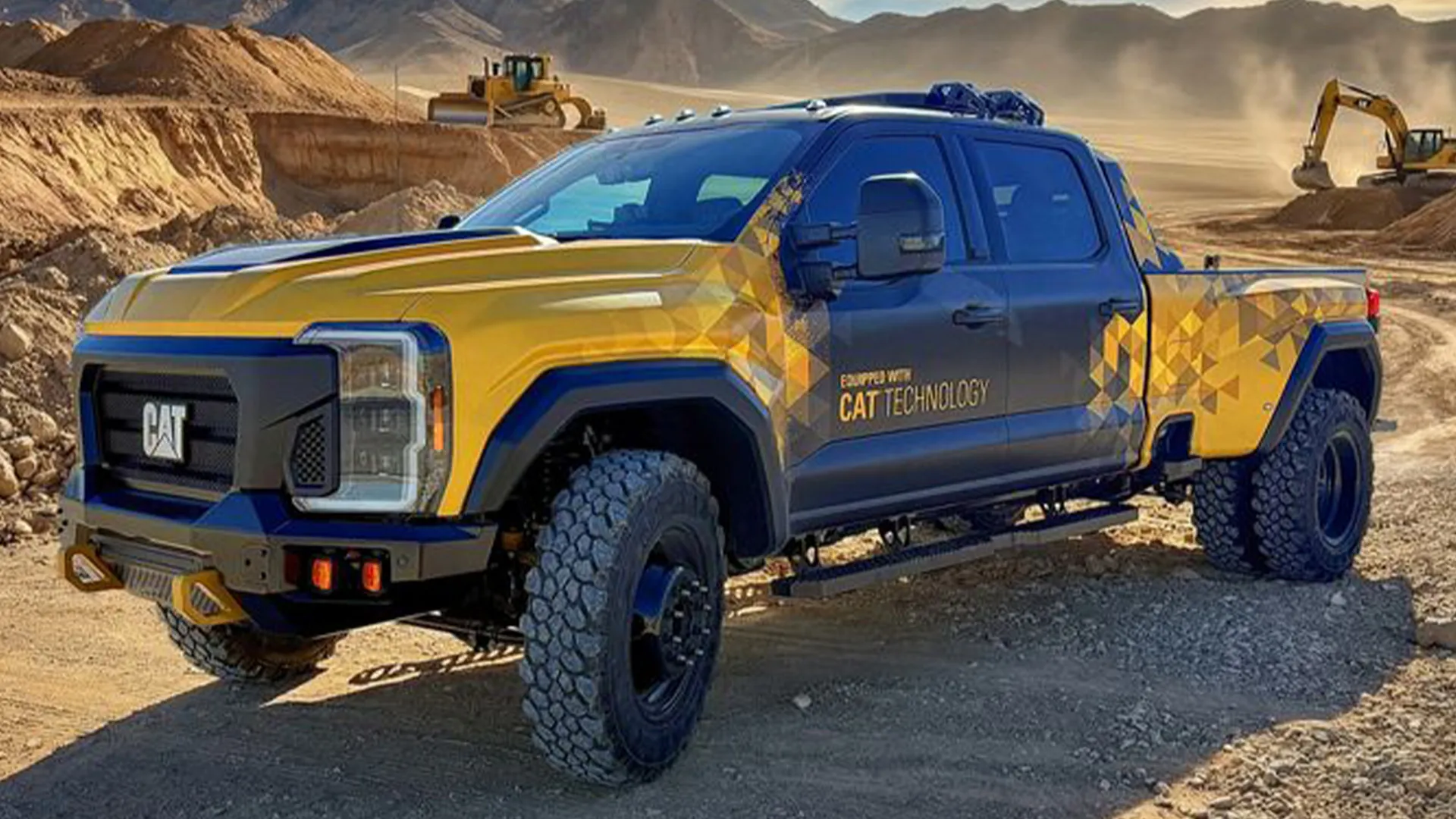
At this week’s ConExpo-Con/AGG trade show in Las Vegas, Caterpillar pulled the covers off its answer to the hype. And it is, quite clearly, a Ford Super Duty with CAT branding.
The Ford logo still appears on the infotainment screen. The bones are pure Super Duty. But CAT badging features on the grille, steering wheel, and tailgate, and the real story is what’s been added to the cabin.
The truck is loaded with a purpose-built tech suite aimed squarely at construction site managers. A drone-launching station sits in the bed. There’s a driver-fatigue monitoring system, camera-based personnel detection for when workers are too close to heavy machinery, and an additional interior display running CAT’s AI assistant alongside its VisionLink Productivity platform. Think of it less as a new truck and more as a mobile command centre for someone running multiple job sites.
Caterpillar’s own press release acknowledged the AI-generated frenzy directly, noting the company “couldn’t look away” from the viral buzz.
The Gap Between Fantasy And Reality
The disconnect between what the internet wanted and what Caterpillar delivered is significant. Back in 2024, an internal source at Caterpillar told The Drive that engine liners were actively being built for the project, with V6 and V8 variants under consideration and potential pricing between $59,000 and $89,000. That source suggested a ground-up effort was genuinely underway.
What arrived in Las Vegas tells a different story. Rather than developing its own powertrain and competing directly with Ford, GM, and Ram on their home turf, Caterpillar has taken the smarter (if less romantic) approach: take a proven platform and make it indispensable for CAT’s existing customer base.
Why It Still Makes Sense
The strategy echoes what heavy equipment manufacturers have done for decades. Caterpillar’s core customers already operate within its ecosystem of machinery, software, and dealer networks. Adding a pickup that integrates with that ecosystem, one that can launch a site survey drone, monitor operator fatigue, and pull up productivity data from the driver’s seat, is a far more logical play than trying to out-engineer Ford at the pickup truck game.
It also neatly sidesteps the exact problem that killed the International Scout decades ago. International Harvester built a genuinely excellent truck but lacked the dealership infrastructure to sell and service a consumer vehicle. By building on a Super Duty platform, Caterpillar’s truck can be serviced at any Ford dealer while still wearing the yellow badge that matters on a work site.
The Takeaway
The Caterpillar pickup truck is real. It’s just not the truck the internet spent two years dreaming about. For CAT’s core audience of contractors a
nd fleet managers, it might actually be something better: a tool that fits into their existing workflow rather than a vanity project with a diesel V8. For everyone else who wanted a ground-up CAT truck with serious grunt and that unmistakable yellow paint? The AI renders were probably as close as we’re ever going to get.