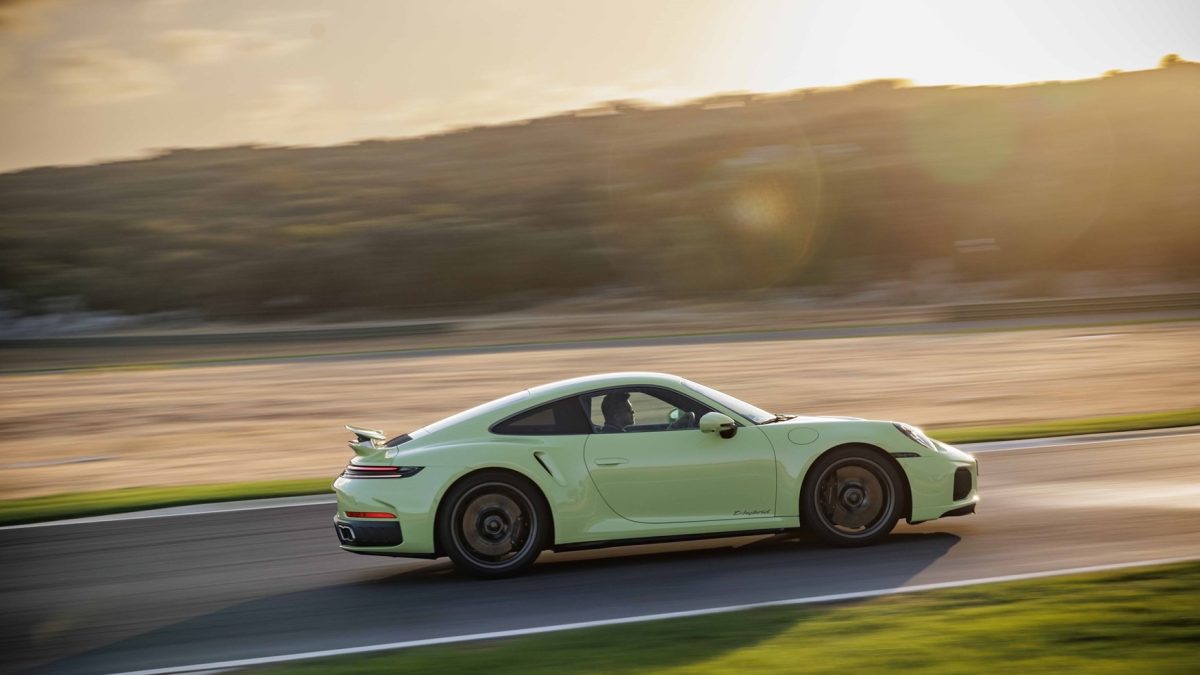
Porsche rolled out the 992.2-generation 911 Turbo S featuring a completely overhauled powertrain.
The T-Hybrid system produces 701 horsepower and 590 pound-feet of torque. That’s 60 horsepower more than the previous model.
Zero to 62 mph happens in 2.5 seconds. Top speed hits 200 mph. The Nürburgring lap time dropped to 7 minutes 3 seconds, a staggering 14-second improvement.
The engine was downsized slightly to 3.6 liters from 3.8. A 1.9 kWh battery pairs with a 60 kW electric motor integrated into the eight-speed PDK transmission.
That motor alone delivers 81 horsepower and 139 pound-feet. The real magic happens with the turbos.
Two smaller electric turbos replace the traditional units. They feature electric motors that spin up the compressors without waiting for exhaust gas pressure. Peak boost arrives instantly with zero lag.
Those electric motors reach 145,000 rpm and act as generators when off boost, feeding power back to the battery.
The engine produces around 630 horsepower naturally. Combined system output hits 701 horsepower.
Torque spread is massive. Peak twist arrives from 2,300 rpm all the way to 6,000 rpm. The previous model delivered peak torque only from 2,500 to 4,000 rpm.
Weight climbed to 1,725 kilograms, up 85 kilograms from before. Porsche deliberately avoided a plug-in hybrid solution to keep mass down.
The suspension uses electro-hydraulic Porsche Dynamic Chassis Control. The 400-volt architecture from the hybrid system powers it.
Body roll decreases. Agility improves. Ride comfort gets better. The front axle lifts quickly.
Brakes grew larger with 420 millimeter ten-piston units up front and 410 millimeter four-piston rears.
That’s the largest combination Porsche has ever fitted to a two-door model. Rear tires are 10 millimeters wider.
Drag dropped 10% despite a new active front diffuser joining the existing active front and rear spoilers.
Exterior changes include new LED headlights, vertically arranged cooling flaps at the front, Turbonite detailing throughout, and a more aggressive rear bumper.
The front features vertical vanes that open for cooling or close for aerodynamics.
An extendable front splitter adjusts automatically. Flaps in the underside reduce front lift or channel cooling air to the brakes. In rain, diffuser flaps stay shut to keep discs dry.
The rear wing extends up and back depending on speed. A new titanium exhaust saves 6.8 kilograms.
Hexagonal tips come standard with oval twin pipes optional. Arches are 45 millimeters wider at the front and 25 millimeters wider at the rear.
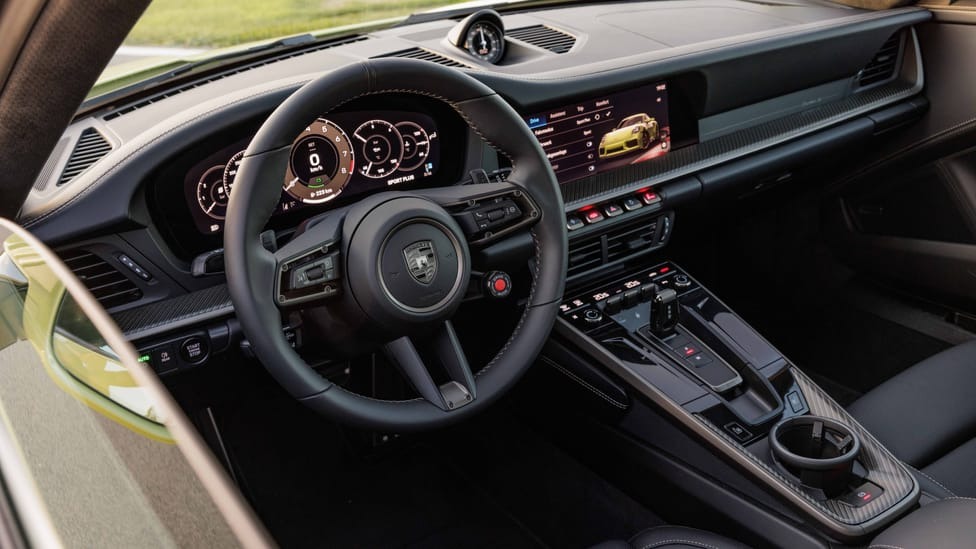
Inside, dual curved screens replace the analog central rev counter. Turbonite accents appear throughout. Sports seats get Turbo S embossing.
The Coupe comes without rear seats for extra storage but you can add them back at no cost.
The Cabriolet includes rear seats as standard. The frunk swallows more cargo than expected.
Standard equipment is comprehensive. Options include front axle lift, 10 millimeter lowered sport suspension, additional cameras, Night Vision Assist, and adaptive cruise control.
Pricing starts at $264,803 for the Coupe and $278,100 for the Cabriolet.
The sales split runs roughly 70% Coupe to 30% Cabriolet.
All-wheel drive sends up to 369 pound-feet of torque to the front axle when needed. Porsche Traction Management handles grip distribution.
Rear-wheel steering reduces the turning circle. Four drive modes adjust character from comfort to track attack.
The Turbo S delivers supercar performance with daily driver usability.