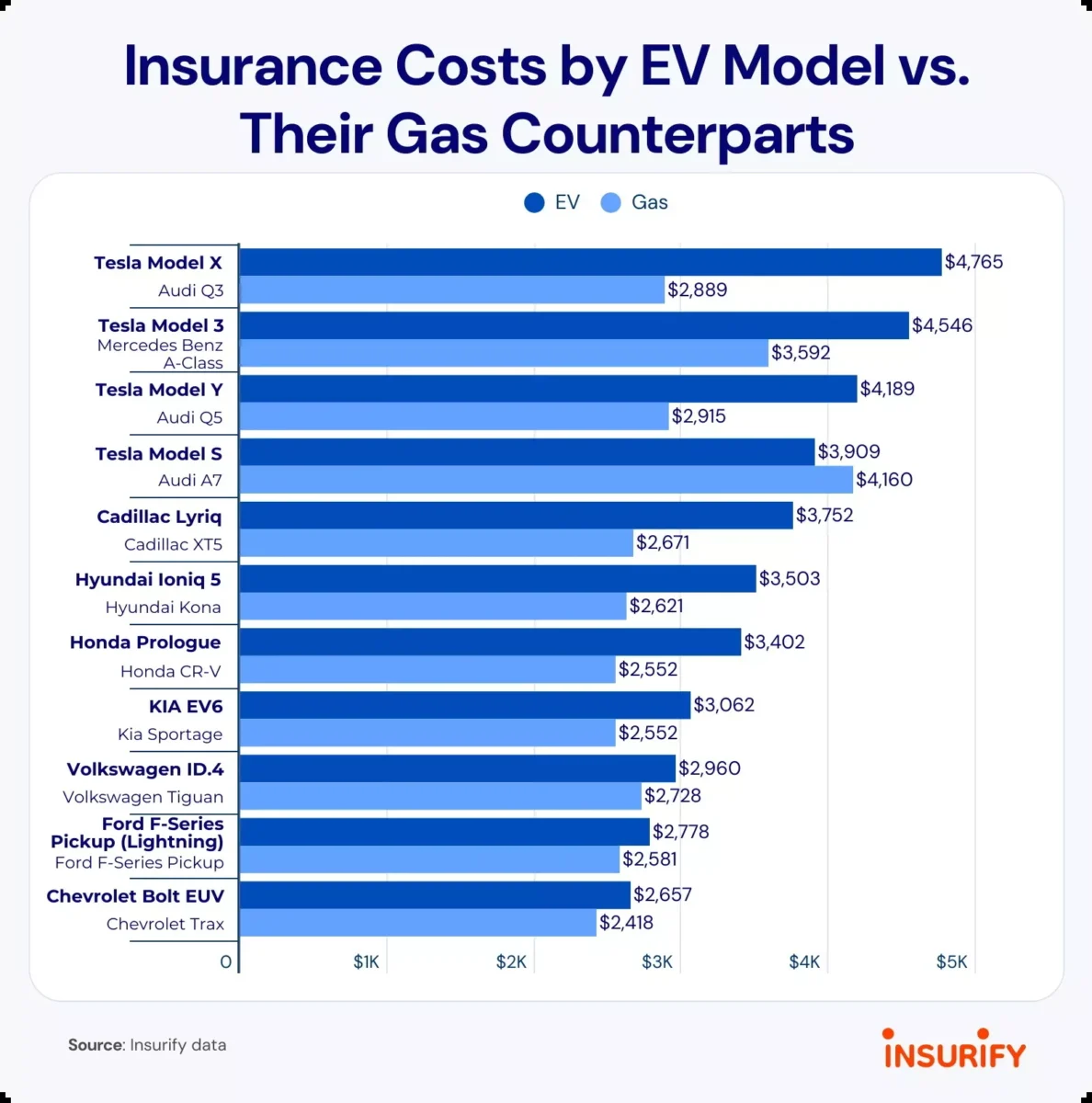
Electric cars already carry a higher sticker price than their petrol rivals, but now a new study says they’re also far more expensive to insure. According to Insurify, EV owners in the US are paying on average 49 percent more for coverage than those driving traditional ICE models.
At first glance, the logic seems sound. EVs are newer, costlier to repair, and often come with fewer parts floating around in the aftermarket.
A damaged battery, for example, can write off a car faster than an engine rebuild, and with limited salvage supply, insurers are adding a premium buffer.
But the numbers start to wobble once you look closer. Critics have been quick to highlight some eyebrow-raising comparisons in the study. Tesla’s Model X was matched against Audi’s Q3.
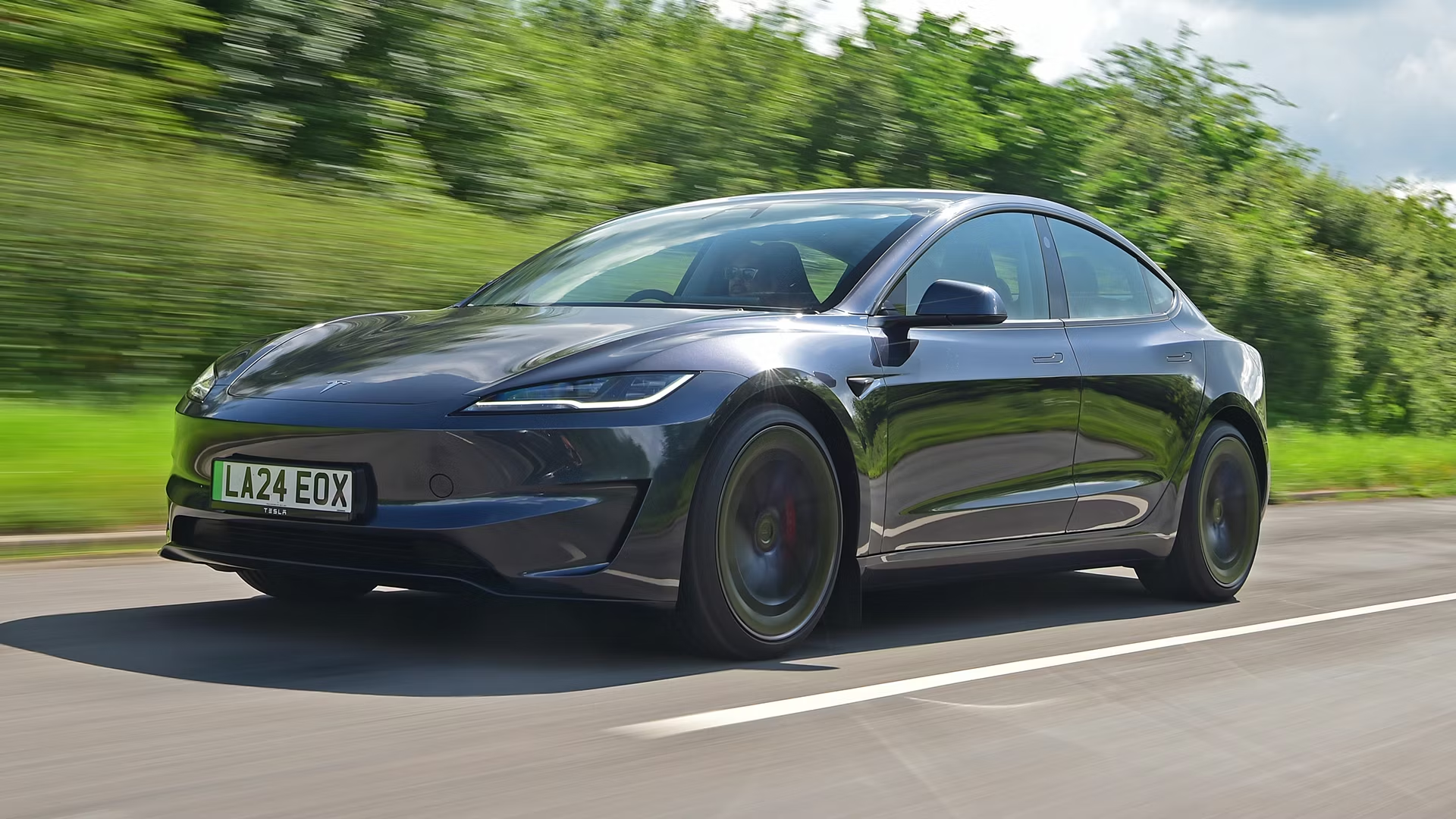
A Model 3 was weighed against a Mercedes A-Class. Hardly like-for-like scenarios, and that’s before you factor in differences in depreciation, warranty cover, and real-world repairability.
Battery warranties are another overlooked piece of the puzzle.
In the US, every new EV comes with federally mandated coverage for eight years or 100,000 miles. That’s a significant safety net for owners, but one that doesn’t appear to have been accounted for in the headline numbers.
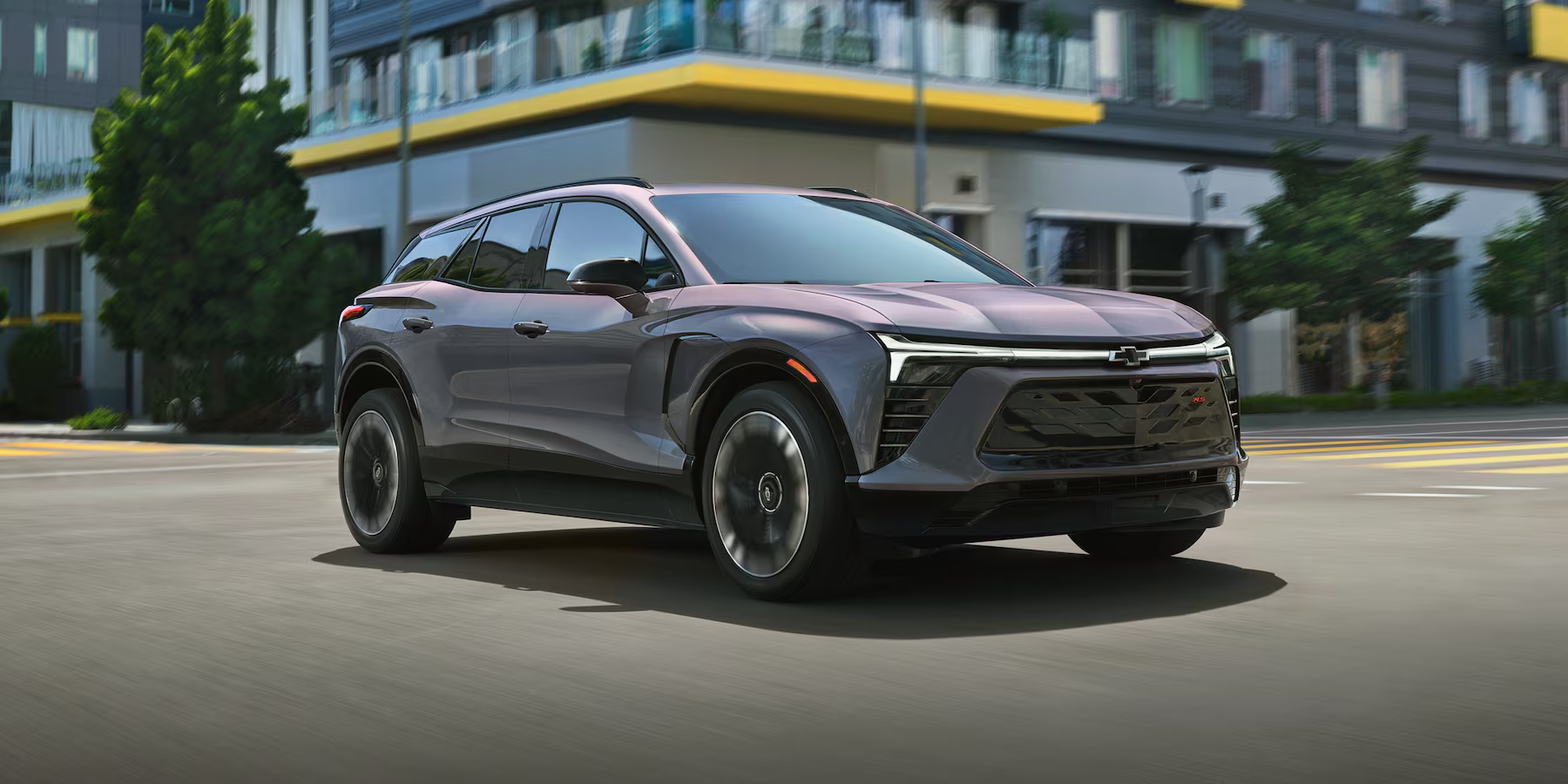
Even so, the study wasn’t entirely without merit. It named models like the Nissan Leaf, Kia Niro EV, Hyundai Ioniq, Chevrolet Blazer EV, Ford F-150 Lightning, and Toyota’s bZ4X as among the cheapest electric cars to insure. These mainstream options point to a future where costs may start to normalise as EVs mature and the repair ecosystem catches up.
For now, insurance on electric vehicles is trending higher, particularly for premium models. But with shaky comparisons and questionable methodology, the report may reveal more about how we’re measuring EV ownership costs than the reality facing most drivers.