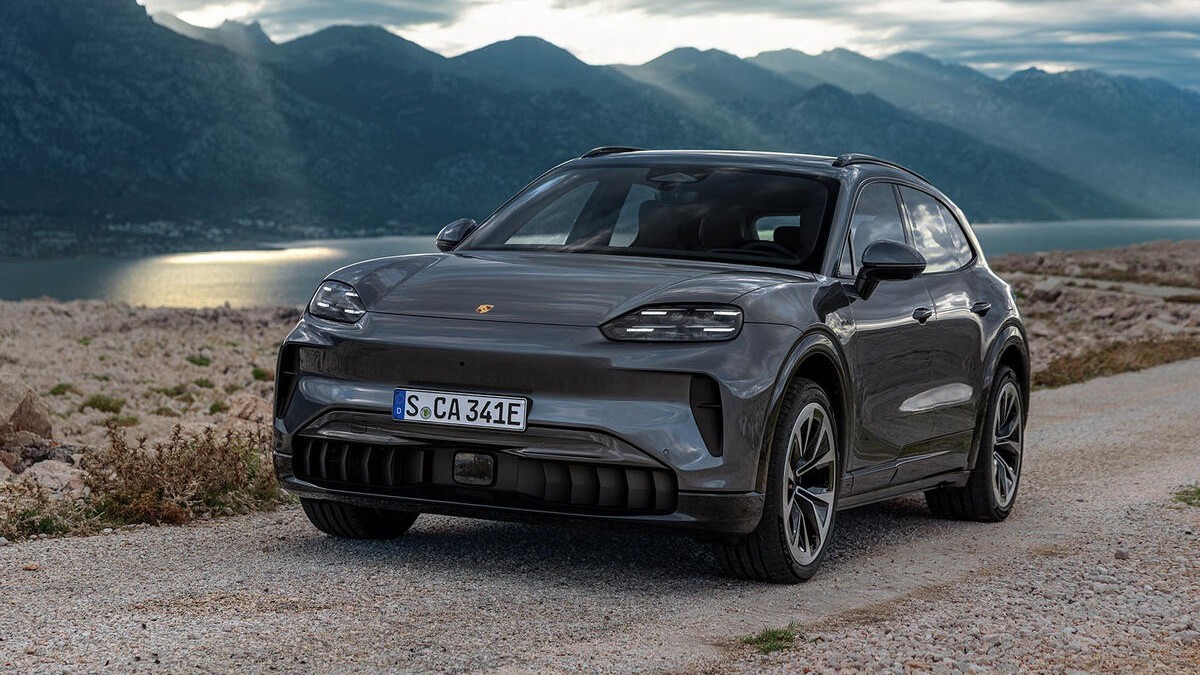
Porsche has unveiled its newest model, the Cayenne Electric, after months of teasing.
The all-electric SUV claims the title as the most powerful production vehicle ever built by the German sports car manufacturer, dethroning the Taycan Turbo GT’s 1,019 horsepower crown.
The range-topping Turbo Electric makes 1,139 horsepower and 1,106 pound-feet of torque in Launch Control mode.
That power rockets the big SUV to 60mph in 2.4 seconds with top speed reaching 162mph.
Normal driving mode still delivers 844 horsepower, whilst the Push to Pass button unleashes 1,017 horsepower for 10 seconds.
Base Cayenne Electric starts at $111,000 with 402 horsepower during regular operation and 435 horsepower plus 615 pound-feet torque when Launch Control activates.
The Turbo Electric commands $165,000, making it among the most expensive Porsches on sale.
A new 113 kilowatt hour battery pack features double sided cooling for better thermal management.
The 800-volt electrical architecture supports DC charging up to 400 kilowatts, recharging 10% to 80% in less than 16 minutes under ideal conditions.
That’s proper Porsche specificity rather than rounding to 15 or 16 minutes.
Two charge ports come standard. The NACS connector handles DC fast charging only on the driver’s side rear fender.
J1772 port manages AC charging only on the passenger side.
Wireless charging debuts as Porsche’s first, requiring proper floor plate charging at peak 11 kilowatts. Just park above it and charging starts automatically.
Recuperative braking recaptures 600 kilowatts during deceleration, matching Formula E race cars.
Porsche claims 97% of all braking during normal driving gets handled by electric motors alone without touching mechanical brakes.
Ceramic composite brakes remain available for Turbo models.
The design looks more traditional SUV than egg-shaped Macan Electric, whilst retaining Taycan’s flowing, low, long nose.
Lower grille features active flaps managing airflow. Turbo adds movable blades in the rear bumper cheeks for extreme aero treatment.
All these components, plus a curvy body, achieve a 0.25 drag coefficient, pretty low for an SUV.
Tesla Model X hits 0.24 on average, but the Cayenne looks considerably better for that negligible efficiency difference.
The electric version measures 2.1 inches longer than the petrol-burning model but gains a five-inch longer wheelbase, significantly improving rear legroom.
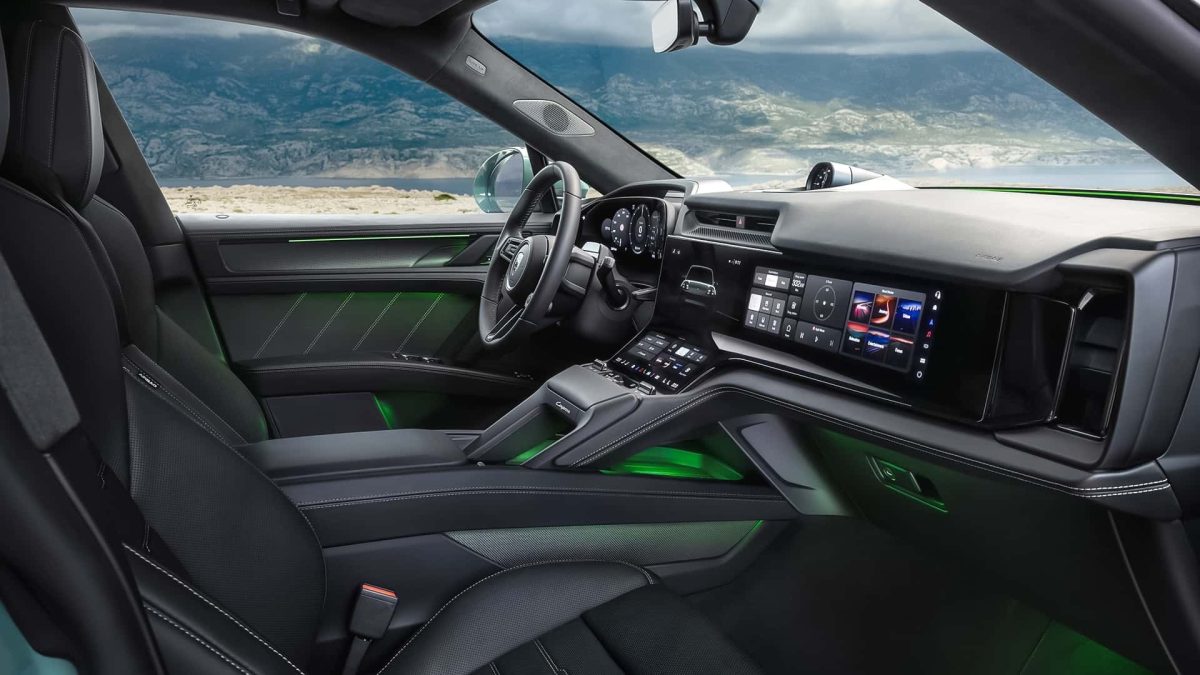
Multiple OLED screens dominate the dash with a central infotainment panel curved toward the bottom.
Rocker switches handle temperature and fan speed for each front passenger, balancing tactile functionality with digital touchscreens.
The Cayenne Electric launches alongside the combustion engine model and plug-in hybrid version. It becomes Porsche’s third American EV following Taycan in 2019 and Macan in 2024.
CEO Oliver Blume confirmed in September that Porsche pulled back previously announced EV plans to continue offering vehicles with internal combustion engines including hybrids.
The company experienced massive changes within automotive environment, prompting strategic realignment across the board.
Ordering opens now with deliveries beginning late summer next year.
The launch arrives after the US EV market faced regulation changes under the Trump administration, including the elimination of consumer credits up to $7,500 for EV purchases.