Mazda has pulled the wraps off a sports saloon that claims to clean the environment as it goes.
The Vision X-Coupe debuted at the Tokyo Motor Show with 503 horsepower from a rotary-electric powertrain.
Combined range hits just under 500 miles. Production is set within the next three years.
The sleek four-door clearly evolved from the Iconic SP sports car concept shown two years ago.
It also draws from the 2015 RX-Vision concept that set the tone for Mazda’s Kodo design language.
The proportions match something like an Aston Martin Vanquish but with four doors and four seats.
A turbocharged twin-rotor engine pairs with an electric motor and battery in a plug-in hybrid system. The battery alone powers the car for nearly 100 miles.
Unlike the MX-30 R-EV crossover where the rotary acts as a generator, this concept’s rotors actually drive the wheels directly. That’s how the old RX-3, RX-7 and RX-8 operated.
The carbon-negative claim comes from two elements. The rotary engine runs on carbon-neutral fuel derived from microalgae. That cuts emissions by 90 percent compared to conventional petrol. A carbon-capture device at the tailpipe shaves another 20% off.
Theoretically that reduces emissions by 110 percent, meaning the car cleans the air as you drive.
Chief technical officer Ryuichi Umeshita explained the thinking clearly. Battery EVs are good for going carbon-neutral.
But with internal combustion engines running alternative fuels, Mazda can go even further to carbon-negative. That’s something battery EVs cannot achieve.
Microalgae fuel is cheaper and less energy-intensive to produce than synthetic alternatives.
It’s compatible with existing production engines and fuel station infrastructure. Mazda believes it’s very close to producing it cost-effectively at scale.
Challenges remain though. Rotary engines inherently produce more emissions than conventional engines.
The vision car uses a rotary as a drivetrain, not a generator. Achieving good emission levels across a wide range from low rpm to high rpm requires more development. Umeshita said the firm still needs two to three years to make it viable.
That’s why the MX-30 R-EV’s rotary operates at low revs only as a generator, staying within legal emission limits while charging the battery.
Mazda is investing in a next-generation engine-generator that will emit less CO2 for future range-extender models.
The Rotary Engine Development Group is working on meeting global emissions standards including US requirements.
Umeshita said they have very good prospects for that as a generator and are very close to being ready for deployment.
Mazda won’t necessarily build a production version of the Vision X-Coupe exactly as shown.
But some technologies or design elements will feature in future Mazda cars.
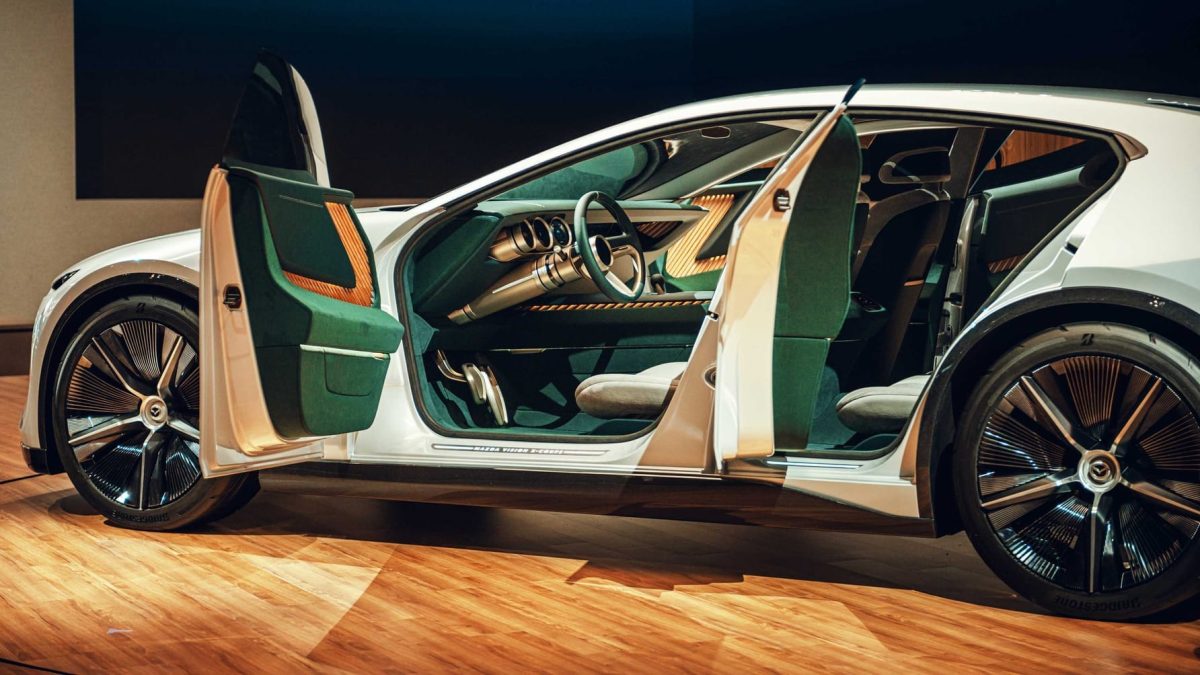
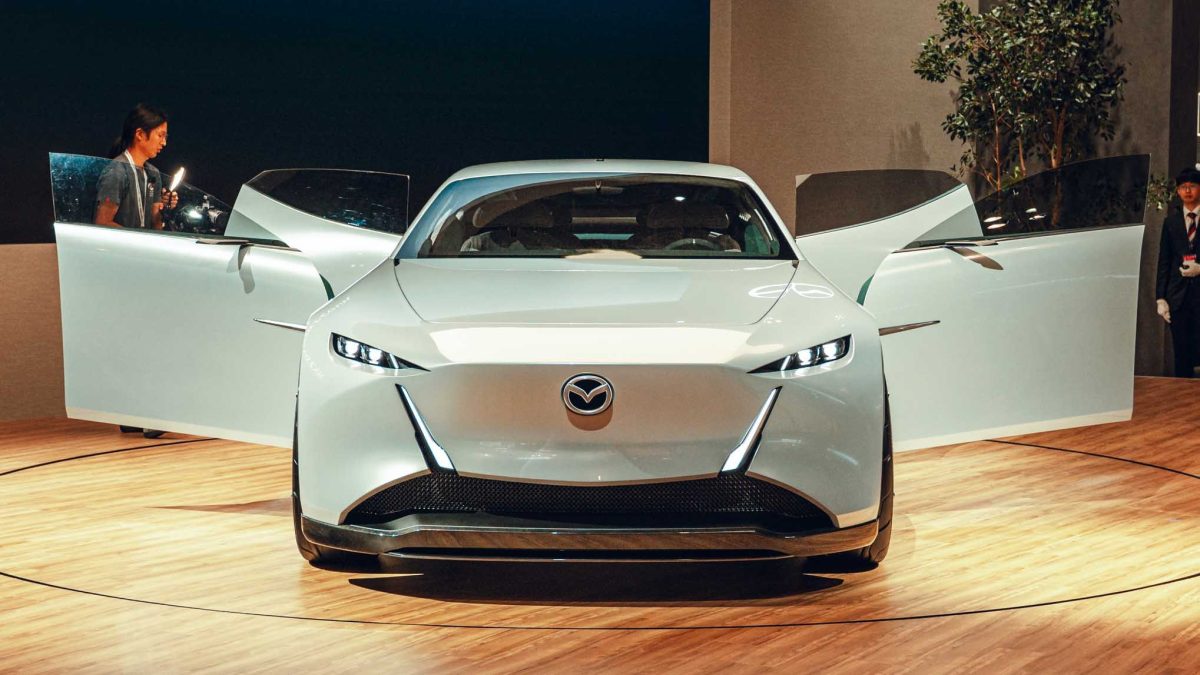
The concept measures 5,050 millimeters long and 1,480 millimeters tall, similar in size to the Polestar 5 and Lotus Emeya.
The design showcases an evolved interpretation of Mazda’s elegant Kodo language.
A long probing bonnet and distinctive cab-rear silhouette bolster its long-range GT credentials. Unlike the mid-engined Iconic SP, this positions the rotary up front in traditional sports saloon fashion.
Mazda boss Masahiro Moro said the company remains committed to fulfilling the desire of those who love cars and wish to continue driving as long as possible. That’s the real message here.