Lexus is exploring its next flagship after retiring the LS sedan earlier this year. The LS ran for over 3 decades but fell victim to declining demand for large luxury sedans.
Before it left, the automaker gave it one last hurrah with a limited Heritage Edition.
Now Lexus needs to answer a critical question: what’s a luxury brand without a flagship?
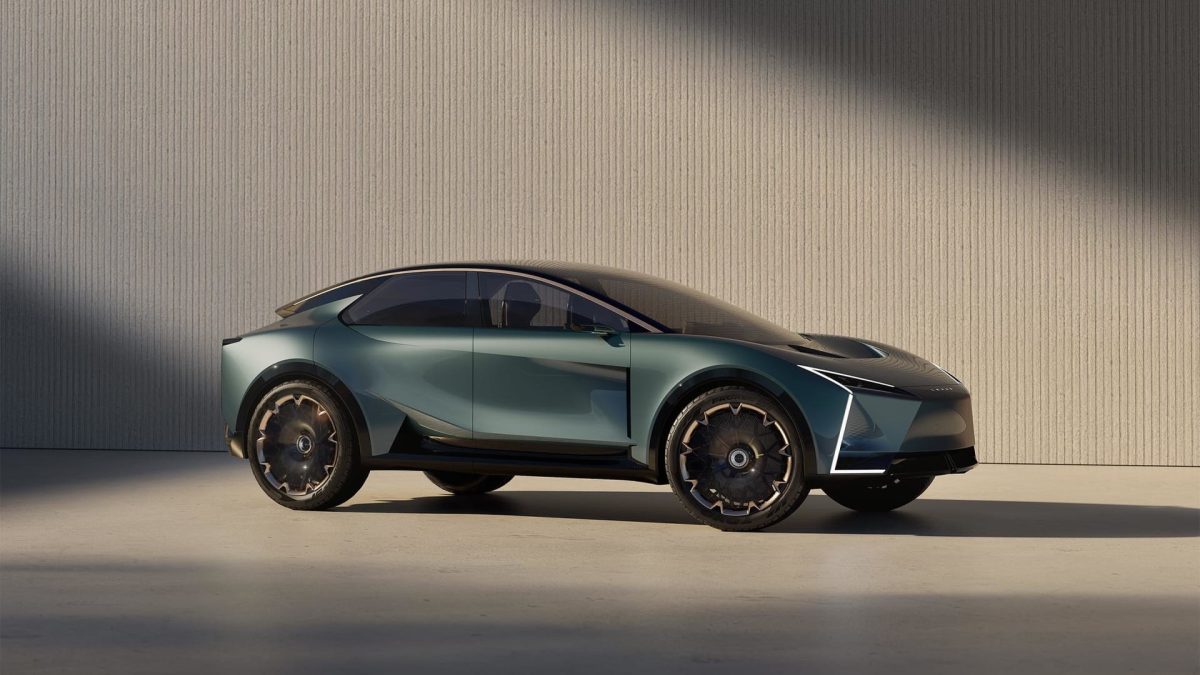
The LS Coupe Concept debuted at the Japan Mobility Show as one possible solution.
Ian Cartabiano, president of Toyota’s CALTY Design Research in California, calls it a balance of contradictions.
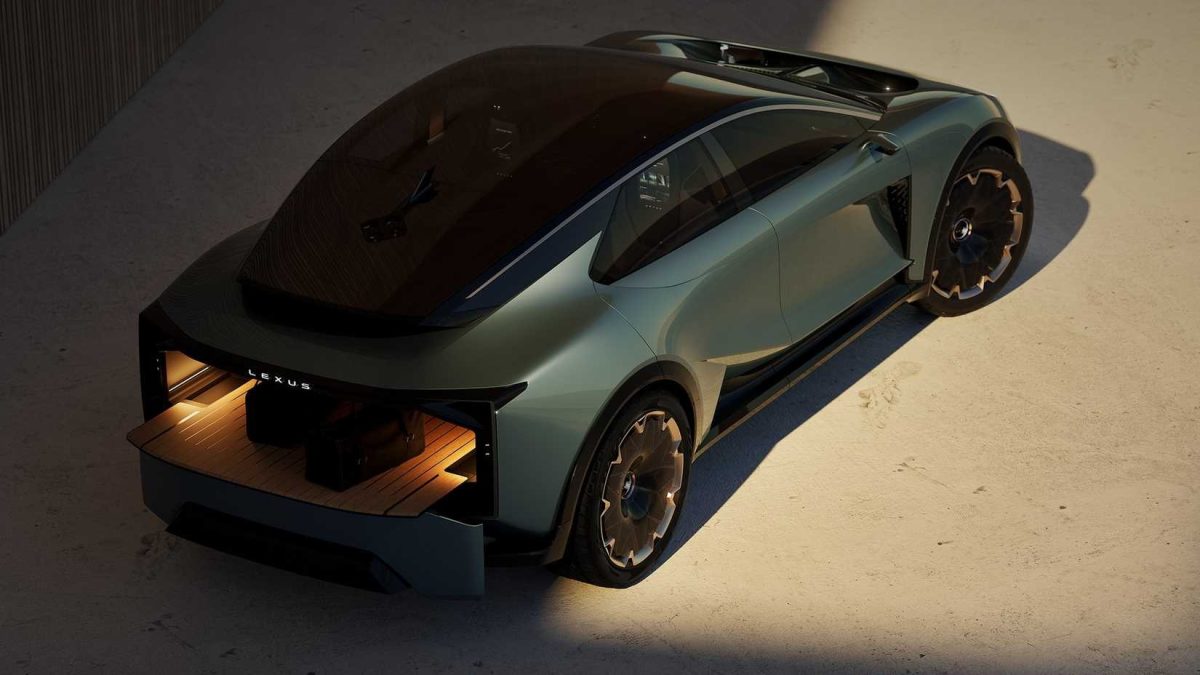
The design blends coupe, sedan, and crossover proportions into one high-riding platform.
It competes directly with premium SUVs from Mercedes, BMW, and Porsche.
The profile shares subtle similarities with the Toyota Crown Signia, another model finding new balance between sedan and crossover.
Familiar Lexus design cues remain. The spindle grille returns but its boundaries get framed with LED lighting.
The smooth front face has no openings to feed air into an engine compartment. That suggests electric power, though Lexus hasn’t committed to any specific powertrain yet.
The cabin feels high-tech but almost Scandinavian in its simplicity. A two-level digital display mounts behind the yoke-style steering wheel.
The driver’s seat is designed for performance. Passenger seats prioritize comfort.
Rear passengers get huge portrait-format touchscreens mounted behind the front seats with automatically deploying armrests.
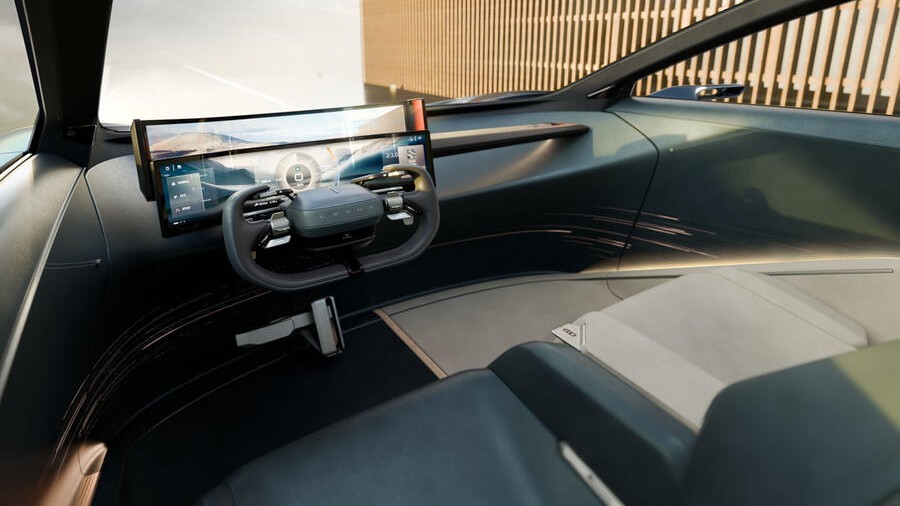
Legroom exceeds the outgoing LS sedan thanks to a taller seating layout.
Rear passengers enjoy the same space as a traditional luxury saloon. An extendable cargo bed makes accessing luggage or groceries easier.
Rather than a conventional bootlid, the concept features a pull-out drawer for elegant storage.
Craftsmanship remains central to the experience. Japanese artsugi woodcrafting appears throughout, where individual pieces feature such precise joints that they merge into one.
Three widescreen digital displays run the next-generation Lexus infotainment system. The yoke steering wheel hints at continued development of the RZ’s steer-by-wire system.
One unusual feature is a high-speed drone that deploys from the rear deck. It follows the car around documenting journeys, adding fun to the ownership experience.
The sports-style driver’s seat conveys the ongoing importance of performance despite the luxury focus.
Toyota isn’t ready to discuss production plans. Ian Cartabiano, president of Toyota’s CALTY Design Research in California told the media that at the moment, there’s no dedicated platform for any of the concepts.
Lexus hasn’t decided on powertrain technology either. The design chief confided that if it goes into production, it would very likely follow the company’s multi-pathway strategy. That means a mix of gas, hybrid, and possibly all-electric options.
Lexus could relatively easily use Toyota’s E-TNGA modular architecture for production. That would make it a close relation to the smaller RZ.
A production version might serve as an electric equivalent to the RX SUV, Lexus’s second-longest-running product line and one of its most popular global models today.
The concept is important for what it shows about future Lexus products.
Advanced technology, craftsmanship, and flexibility in powertrain choices all point toward the brand’s evolving direction as traditional luxury sedans fade from relevance.