Christian von Koenigsegg just hinted that his million dollar hypercar company might build something mere mortals can actually afford. Speaking at Goodwood Festival of Speed, the Swedish founder revealed he’s been exploring the idea of creating simpler, more obtainable sports cars that could compete with Porsche pricing.
The concept emerged during a discussion of a Swedish design student’s Koenigsegg city car proposal called the Variera. While dismissing that particular vision, von Koenigsegg acknowledged his team has been considering volume production of accessible performance cars.
The challenge is enormous. Koenigsegg currently produces double digit numbers annually of cars costing millions each. Finding a few hundred buyers every few years keeps the business running smoothly, with current models sold out completely. Scaling that approach to compete with 911 or Cayman volumes represents a fundamental business transformation.
Von Koenigsegg admits high volume manufacturing is “a different animal than hand-built low volume production.” The Swedish factory recently expanded to accommodate models like the Gemera, but he recognizes you can’t scale car production overnight without stumbling badly.
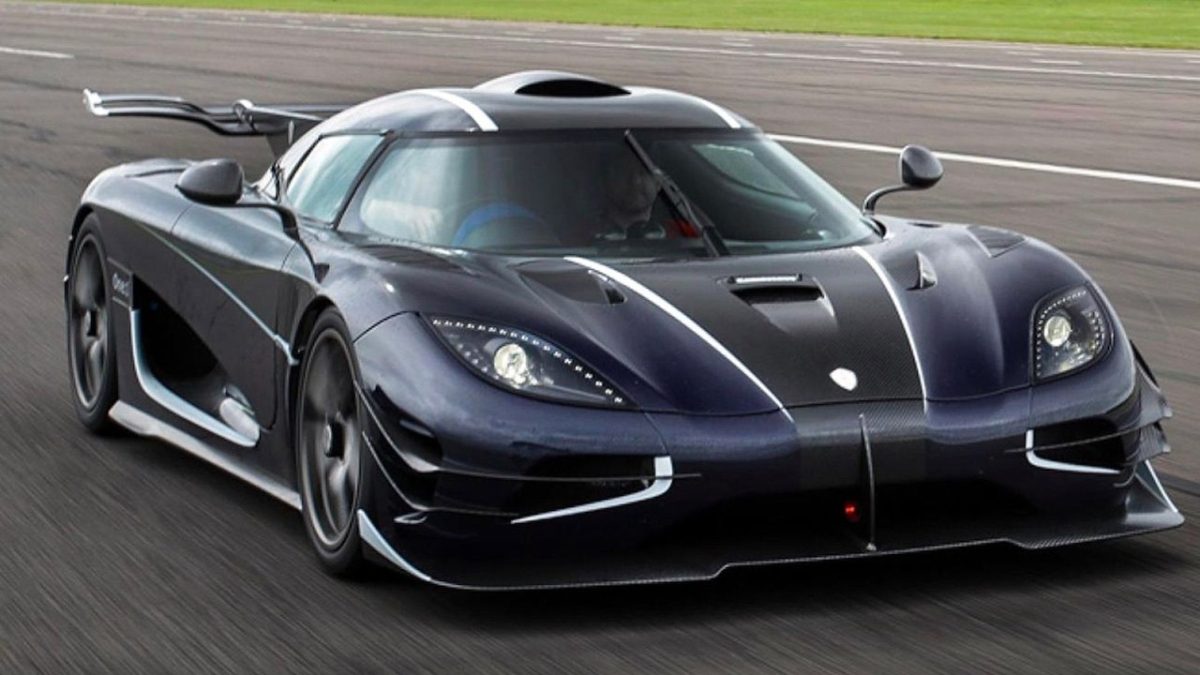
The founder brings relevant perspective to affordable sports car development. His daily driver is an original Mazda MX-5 Miata, while half his development team owns various Miata iterations. Von Koenigsegg has also owned two Toyota GR Yaris hot hatches, demonstrating appreciation for accessible performance.
Koenigsegg’s TFG 3-cylinder engine could provide the perfect foundation for a junior sports car. The 2.0-liter unit produces up to 600 horsepower while running as both two-stroke and four-stroke configurations, creating inline six sound characteristics. Combined with Dark Matter electric motor hybridization, output could reach 900 horsepower in a sub-3,000-pound package.
Such specifications would position a hypothetical affordable Koenigsegg against the McLaren Artura or Porsche 911 Turbo S rather than basic sports cars. The technology transfer from hypercar development could create genuinely compelling alternatives to established performance benchmarks.
Two new hypercars are already promised for customers who missed Gemera or Jesko allocation, showing the company remains committed to its core ultra-high-end market. Any volume expansion would need careful step-by-step execution to avoid compromising the brand’s exclusivity and engineering excellence.
Von Koenigsegg’s cautious tone suggests this remains speculative rather than confirmed development. The economics of scaling boutique hypercar expertise to volume production present significant challenges that even innovative manufacturers struggle to overcome successfully.