Audi just confirmed its stunning Concept C two-seater will reach production in 2027, potentially reviving the TT nameplate with radically different design language.
CEO Gernot Döllner stated that this isn’t distant future vision but a concrete preview of an upcoming production vehicle.
The electric sports car unveiled last month draws inspiration from the 1936 Auto Union Type C racer and 2006 A6, featuring a vertical grille motif, quad element LED headlights, and clean minimalist surfacing.
The convertible coupe marks a complete departure from Audi’s recent design direction, abandoning fussy details for architectural simplicity.
You can tell this is heading for showrooms by looking at the practical details. Standard road tires. Proper door mirrors instead of cameras.
Functional windscreen wipers. Even a rear number plate cutout. These boring necessities don’t appear in pure fantasy concepts unless production follows within two years.
The vertical grille up front functions as a window for front-facing radar rather than a traditional cooling inlet.
Quad LED headlights reference Audi’s obsession with the number four: four rings, quattro all-wheel drive, and perpetual tailgating proximity.
The minimalist rear ditches fake mesh and cosplay exhausts plaguing recent RS models. Quad LED elements mirror the front fascia.
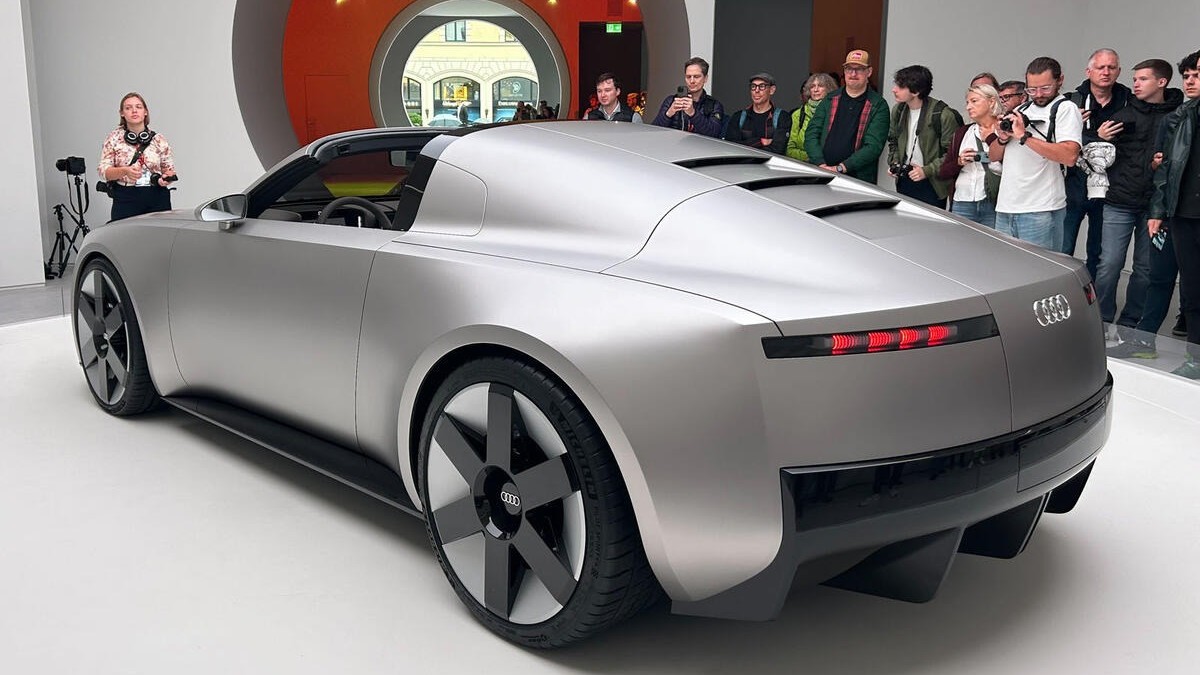
Slats replace the back window supposedly for weight savings, nodding to the R8 LMS endurance racer and Will Smith’s spherical-wheeled Audi from I, Robot.
Revamped 1990s Avus six-spoke wheels get aero faces and 3D machined spokes. Rear haunch charging flaps recall old R8 sideblade styling.
The whole thing screams mid-engined despite lacking traditional e-tron badging and cooling vents.
The interior is where Audi really breaks from current trends. No massive screens. No touch-sensitive everything. Just proper physical controls with real tactile feedback.
The circular steering wheel hosts a milled Audi logo surrounded by anodized aluminum switchgear delivering solid clicks.
There’s even a proper round steering wheel with a round center, looking timeless instead of trying too hard.
Climate controls shine through a translucent shelf while the central infotainment screen motors out from a hidden compartment when you press an actual switch.
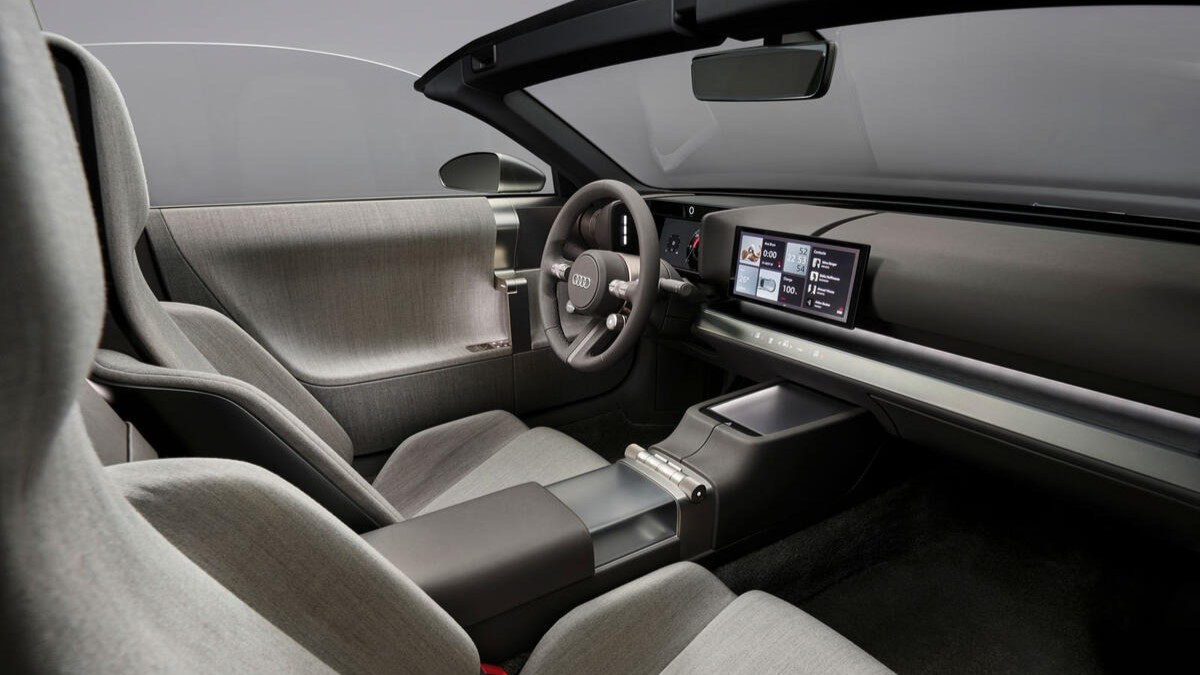
The driving position feels quintessentially Audi with slightly offset pedals to the right.
Wool upholstery provides breathability for the ventilation system rather than cow-friendly credentials.
The fabric weave lets speakers project audio without traditional grilles. No grilles inside or outside represents genuinely new thinking from Ingolstadt.
Platform sharing rumors suggest connection with the delayed electric Porsche Boxster and Cayman, now pushed to late 2027 while Porsche searches for buyers willing to pay six figures for battery-powered sports cars.
That timing gives Audi the opportunity to refine the underpinnings.
That timing gives Audi the opportunity to refine the underpinnings.
Making an EV sports car causes some crisis for Porsche but makes more sense for Audi, which historically sold vehicles through design rather than driving dynamics.
If Audi can deliver a lightweight, affordable electric sports car with this design language, it could be a massive trendsetter rather than another compromised EV nobody asked for.
The Concept C has genuine potential to reshape expectations for what an Audi sports car should be. Less screen time, more steering feel. Less fake vents, more honest design.