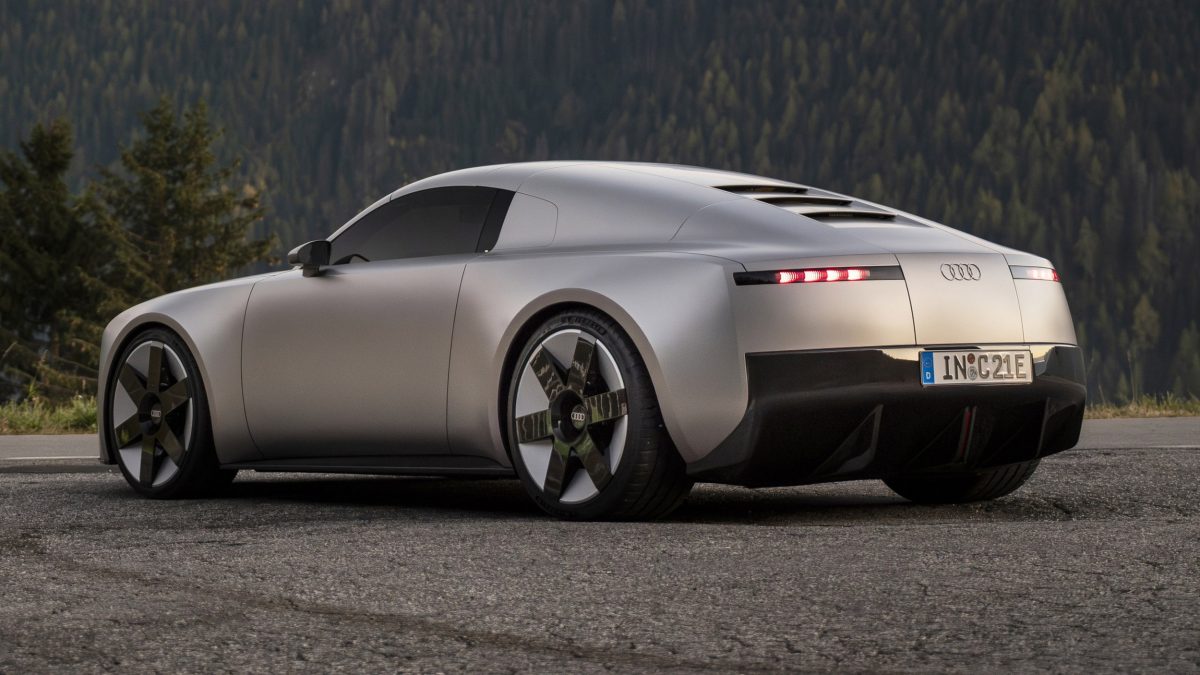
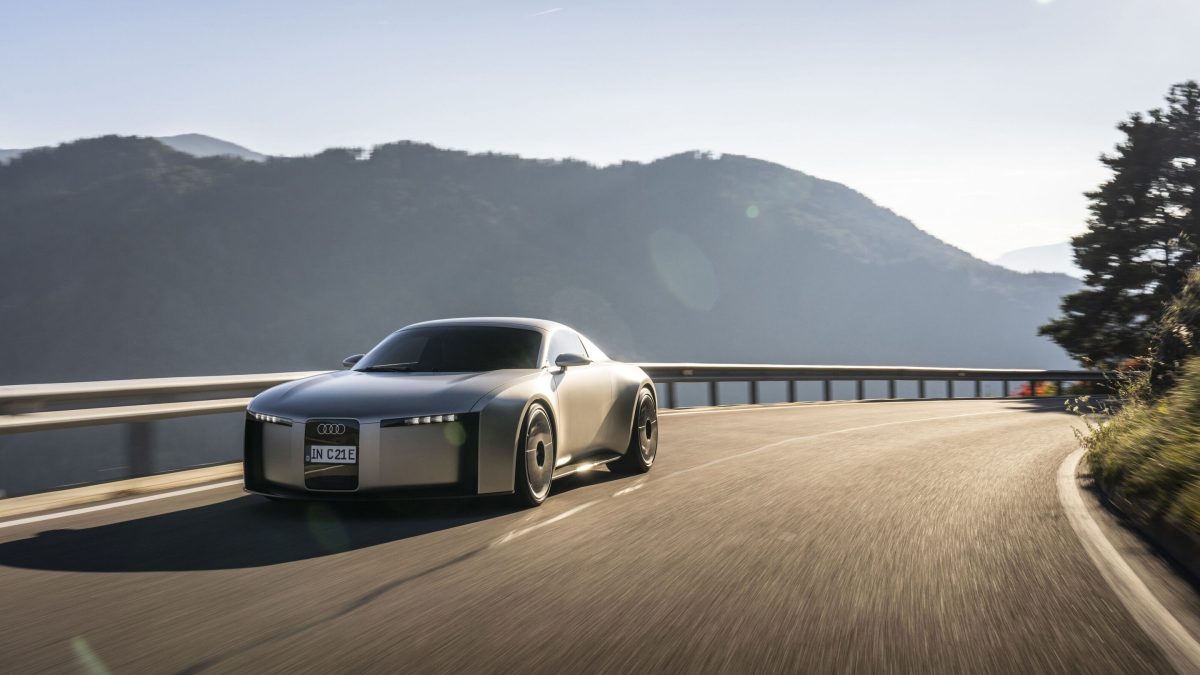
Audi went a step further with the Concept C, making it fully street legal. It’s got turn signals, windshield wipers, a horn, and a proper German license plate.
The rear-mounted electric motor pushes it up to 90 mph and feels closer to production hardware than showroom decoration.
The Concept C debuted at the IAA Mobility Show in Munich back in September, and it immediately stood out.
Not because it looked dramatic, though it does. But because it represents Audi’s next phase of design language and previews a real production model coming in 2027.
That’s not far away, and judging by what Chief Creative Officer Massimo Frascella said, 87% of what you see here will make it to showrooms unchanged.
The production version will ride on a newly developed architecture shared within the Volkswagen Group.
That means it’s likely related to Porsche’s upcoming electric Boxster and Cayman.
Daniel Schuster, spokesperson for technical development, confirmed the platform will be used across both brands, which should help achieve economies of scale and make the business case work.
Audi CEO Gernot Döllner expects annual sales in the very low five-digit range, but he’s confident the Four Rings can still turn a profit.
The styling pulls design DNA from several Audi icons. Think TT proportions, R8 supercar stance, and the flowing lines of the legendary 1936 Auto Union Type C race car.
The front wears slim horizontal LEDs flanking a reinterpreted grille, with upright air intakes adding visual depth.
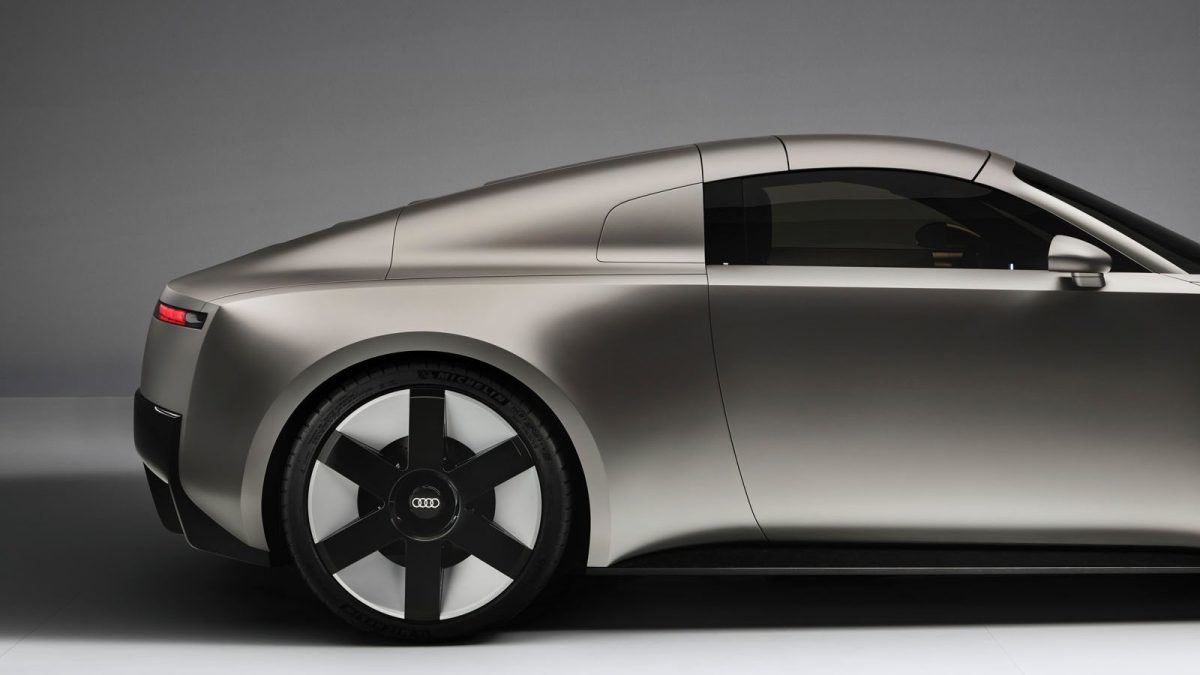
Along the sides, the bodywork stays taut and uncluttered with proportions leaning toward exotic sports car territory.
The tail slopes downward with louvers replacing the rear glass, finishing in slim LED taillights above a pronounced diffuser.
What makes this concept genuinely interesting is the electrically retractable hardtop.
That’s making it to production as the sole body style, giving buyers a coupe and roadster in one package.
No fixed-roof coupe is planned, which means Audi is committing fully to the convertible format. That’s a bold move in a segment where most competitors offer both.
Inside, a 10.4-inch infotainment display folds neatly into the dashboard, paired with a digital instrument cluster that keeps the cabin looking clean.
Haptic controls sit beneath the central touchscreen, and there’s a touch-sensitive button for opening the doors.
That last bit feels like Audi hasn’t learned from VW’s recent retreat from similar interfaces in favor of proper physical buttons. Time will tell if those quirks survive to production.
The battery pack sits behind the driver and ahead of the rear axle, mimicking a mid-engine layout that allows a notably lower seating position than EVs with underfloor batteries.
Weight comes in at about 3,700 pounds, roughly the same as a rear-wheel-drive R8 V10 Spyder.
A new suspension was developed specifically for this model instead of sourcing parts from the TT or R8.
The production lineup will likely include a rear-wheel-drive model alongside Quattro versions with dual-motor setups for added power and traction.
While Porsche will reportedly offer internal combustion options for high-performance 718 trims, Audi plans to go fully electric. Some will call that a missed opportunity, especially considering the gasoline 718 is returning.
But Audi’s betting on pure electric performance, and the 2027 launch will prove whether that strategy pays off.