Audi just cracked the code in China with pricing that makes Western markets look absurd.
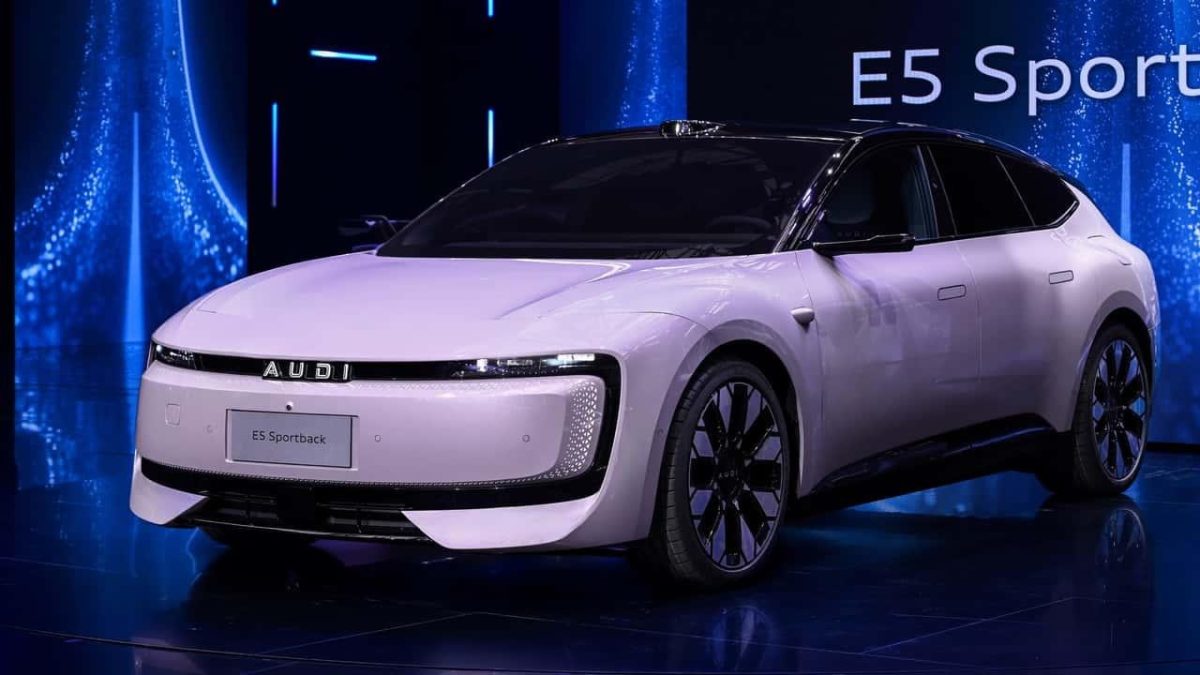
The new E5 Sportback pulled more than 10,000 pre-orders within half an hour of launch, starting at just 235,900 yuan, or about $33,100. That’s Toyota Camry money for a premium German EV.
The base Pioneer model delivers 295 horsepower from a rear-mounted electric motor, reaching 62 mph in 6.1 seconds.
Its standard 76 kWh battery claims 384 miles of range under Chinese testing standards. At 192 inches long, it’s bigger than the new A5 Avant and firmly in midsize territory.
Standard features include camera-based side mirrors, soft-close frameless doors, a fully digital dash with a passenger screen, built-in LiDAR, three millimetre wave radars, 11 cameras, and 12 ultrasonic sensors for driver assistance.
Deep integration with WeChat, Alipay, and local navigation apps matters more to Chinese buyers than Apple CarPlay ever will.
Performance versions escalate fast. The Pioneer Plus at $37,500, (270,000 yuan) bumps power to 402 hp with a 100 kWh battery good for 480 miles.
The Pioneer Quattro adds dual motors and 518 hp for the same price. The top Quattro hits 776 hp and 62 mph in 3.4 seconds for $44,500 (320,000 yuan).
That’s supercar performance for hot-hatch money. Audi says launch pricing is temporary, hinting it could rise soon.
Comparisons to Western markets show how far pricing has drifted. The cheapest Audi in the U.S. is the A3 sedan at $40,000 with just 201 hp. For an EV, buyers stretch to nearly $50,000 for a Q4 E-Tron.
In Germany, the least expensive crossover is the Q2 at $38,000 with a 116 hp three-cylinder engine, including 19% VAT.
Labor explains only about 10% of the difference, according to the CAR Institute. Batteries and energy cost less in China, factories run leaner, and EV taxes are lower.
Germany’s 19% sales tax compares with China’s 10%, and EVs often get full exemptions.
Chinese automakers also accept far slimmer margins than German brands. If the E5 were built and sold in Europe, it would likely cost twice as much.
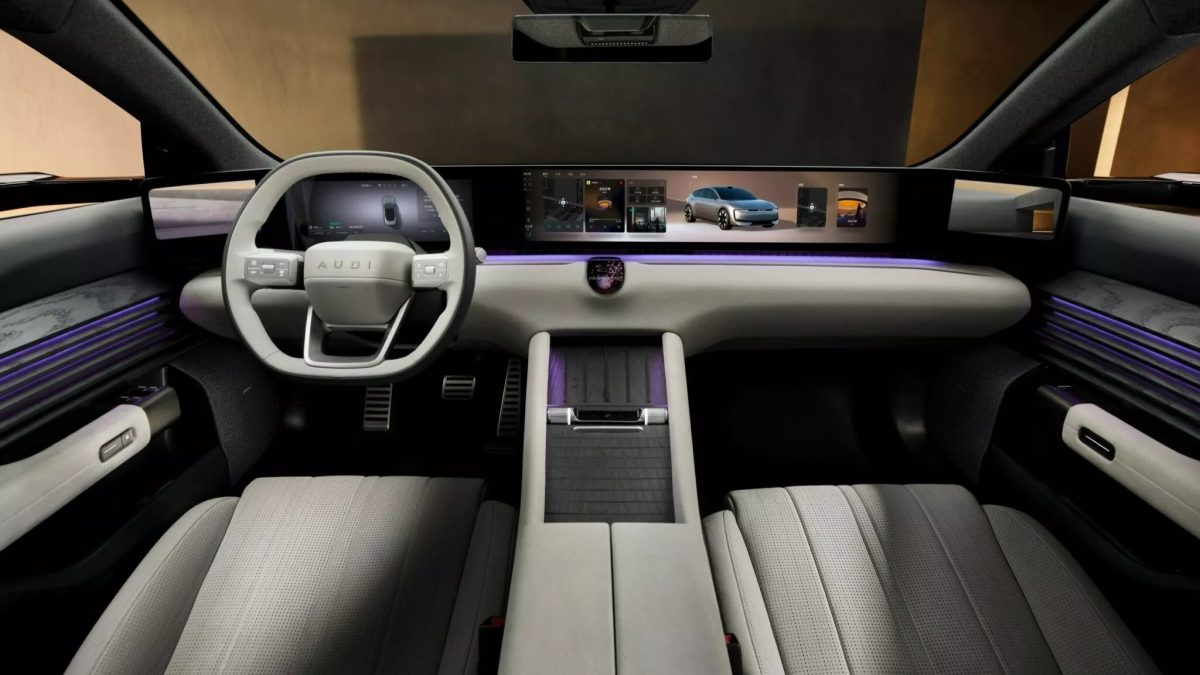
The E5 is exclusive to China and wears fresh branding. Instead of the classic four rings, the grille simply reads AUDI, a clean break aimed at younger, tech-driven buyers.
Audi developed the E5 with Chinese partner SAIC on the new Advanced Digitized Platform, using an 800-volt EV architecture. Two more models a crossover in 2026 and a large sedan in 2027 will follow.
Production takes place at a joint Audi-SAIC plant, with deliveries beginning in September.
The partnership underscores Audi’s struggle to regain ground in China’s fast-growing EV market after decades of dominance in gas-powered cars.
Back in Germany, the contrast is sharp. Audi plans to cut 7,500 jobs by 2029 as Mercedes and Porsche scale back EV projects.
BMW has fared better but still shed thousands of temporary roles. Germany’s auto sector lost over 50,000 jobs last year, erasing roughly 7% of its workforce.
The E5 may be exclusive to China, but its impact won’t stay there. It shows that when cost, design, and technology align, even a legacy brand can reinvent itself.
For Europe’s automakers, the message is clear. The future of the car is being written in China.