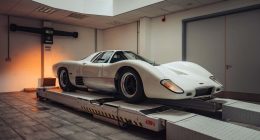
In a leafy pocket of Bali’s Gianyar region, a small workshop is quietly bringing some of the world’s most revered classic cars back to life. Behind unassuming doors, aluminium is hammered, shaped and refined by hand, turning raw metal into rolling tributes to automotive history. This is Tuksedo Studio, a place where craftsmanship still comes first and where patience matters more than production speed.
The studio was founded by Pudji Handoko, a former architect whose fascination with car design dates back to childhood. Long before Tuksedo existed, Handoko was sketching cars on the ground and studying the proportions of classic European machines. That early curiosity eventually turned into years of self-education, studying old photographs, sourcing blueprints online and teaching himself traditional coachbuilding techniques. Even the tools were often handmade, including the English wheel used to shape smooth aluminium body panels.
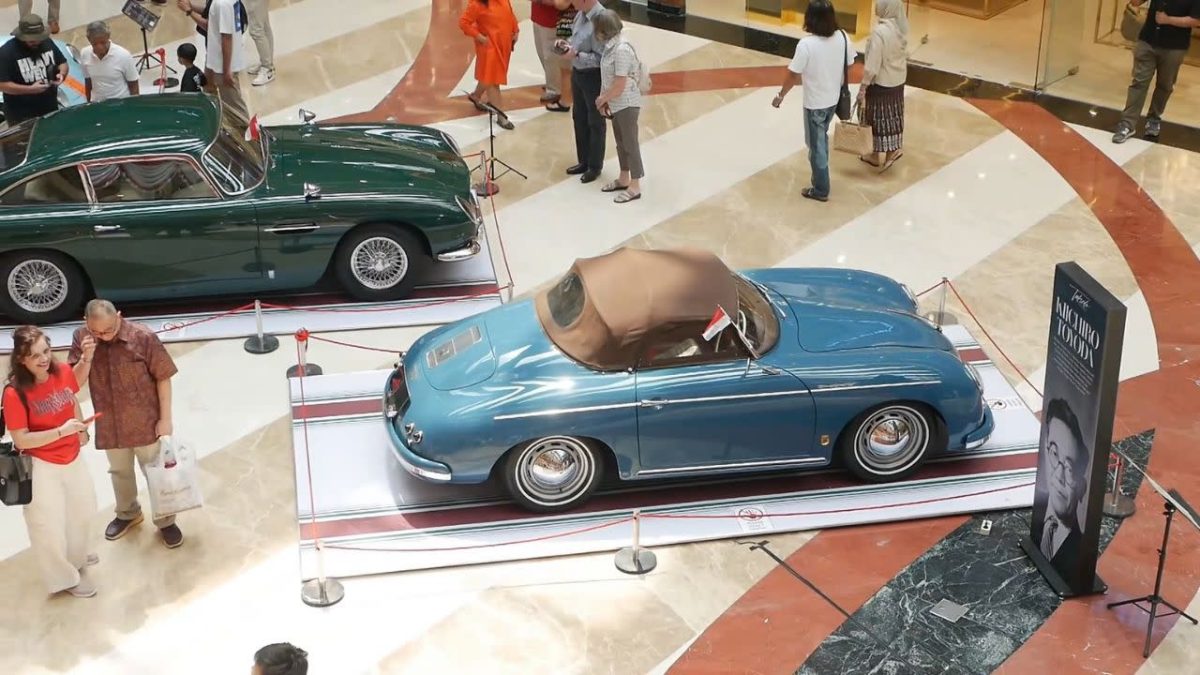
Tuksedo’s first completed build was a Porsche 356 Speedster replica, constructed using the chassis and engine of a Volkswagen Beetle. It was a pragmatic starting point, using a simple donor platform to make an ambitious idea achievable. From there, the studio’s ambitions grew quickly. Over time, Tuksedo expanded into recreations of the Mercedes-Benz 300 SL Gullwing, complete with its iconic upward-opening doors, the elegant Toyota 2000GT, and Aston Martin DB5s that recall the golden era of European grand touring and cinematic glamour.
Today, the studio employs around 80 craftspeople, each contributing to a process that is almost entirely manual. Panels are hammered and shaped by eye. Interiors are assembled like bespoke furniture. Even small details such as steering wheels, switches and window winders are fabricated in-house. The result is a level of detail that feels closer to an art studio than a factory floor. Prices reflect the labour involved, starting at roughly AUD $230,000 for a Speedster replica and climbing beyond AUD $500,000 for a Gullwing, still a fraction of what original examples command on the global collector market.
Beyond the cars themselves, Tuksedo has become a point of pride for Indonesia’s creative economy. Officials from the Ministry of Tourism and Creative Economy have visited the facility, viewing it as a model for high-value craftsmanship and experiential tourism. Viral videos and photography from inside the workshop have drawn international attention, turning Tuksedo into a destination for designers, collectors and curious travellers alike. To manage demand, the studio now runs guided tours, complete with a café and library that lend the space an almost European workshop atmosphere.
Demand shows no signs of slowing. Tuksedo reportedly produced around 20 vehicles in 2024, with customers spanning Indonesia, the Middle East, Europe and the United States. Order books continue to grow, often faster than export regulations can accommodate.
While replicas remain the studio’s core focus, Handoko is already looking ahead. After more than a decade studying classic proportions and design language, he is developing an original concept roadster known as the “First Lady,” slated to take shape in 2026. It represents a potential shift from homage to original creation, even as customers continue to ask for more of the classics.
In a world increasingly dominated by automation and digital design, Tuksedo Studio stands as a reminder that some things are still best done by hand, slowly, carefully, and with deep respect for the past.