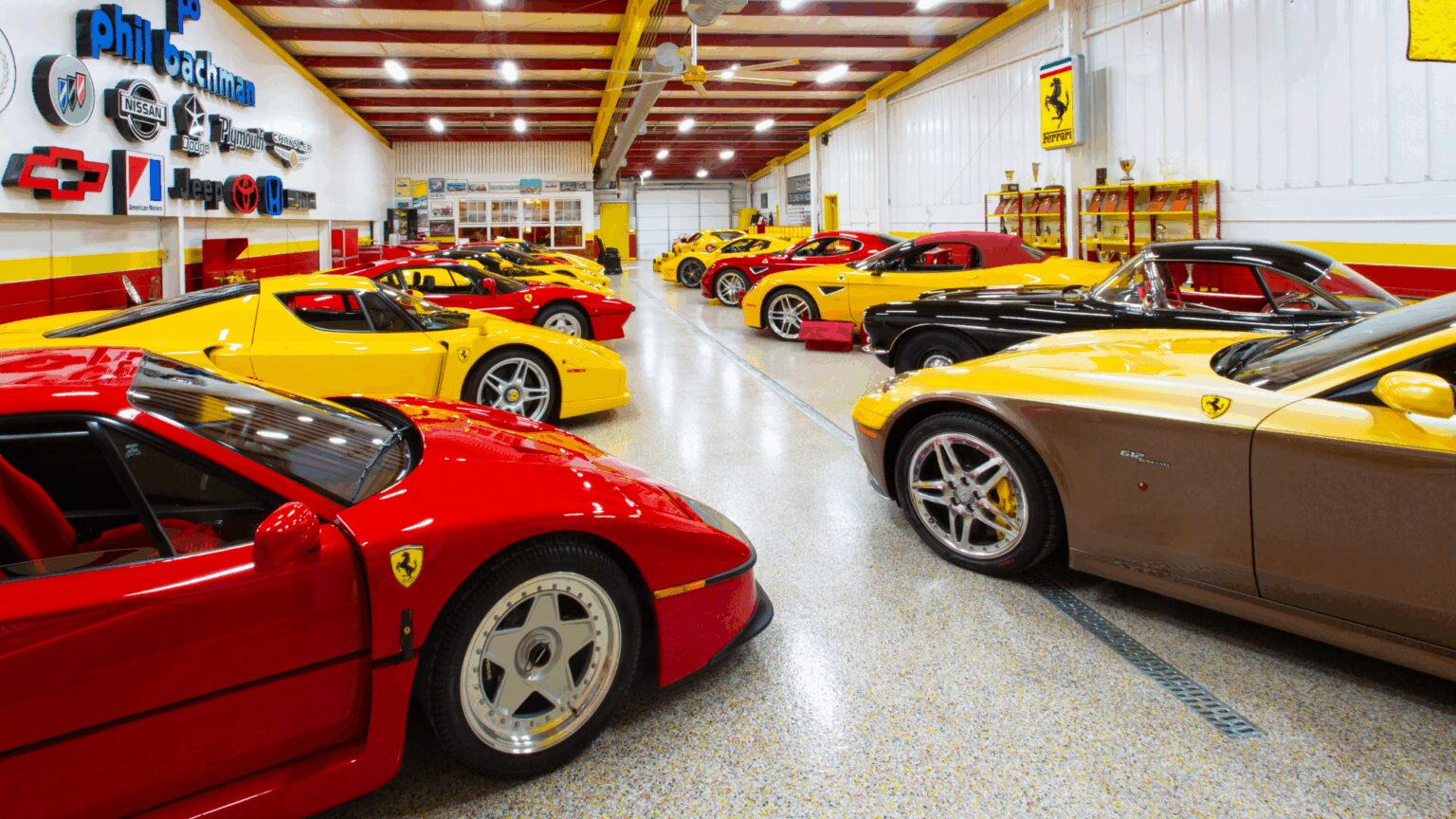
What began as a passion project has grown into one of Ferrari’s most recognized private collections.
Phil and Martha Bachman curated the 46 cars that will cross the block at Mecum Auctions Kissimmee from January 6 to 18, 2026.
The collection showcases decades of Ferrari design, signature yellow paintwork, and several rare end-of-line chassis.
Phil Bachman’s Ferrari journey started in 1983 at an auto dealer’s trade show in Washington, D.C. A Ferrari 308 GTS Quattrovalvole struck a chord.
Days later, he ordered a 1984 model in bold yellow through a Nashville dealer. That color choice became his signature, setting his cars apart from the multitude of red Ferraris dominating the marque’s history.
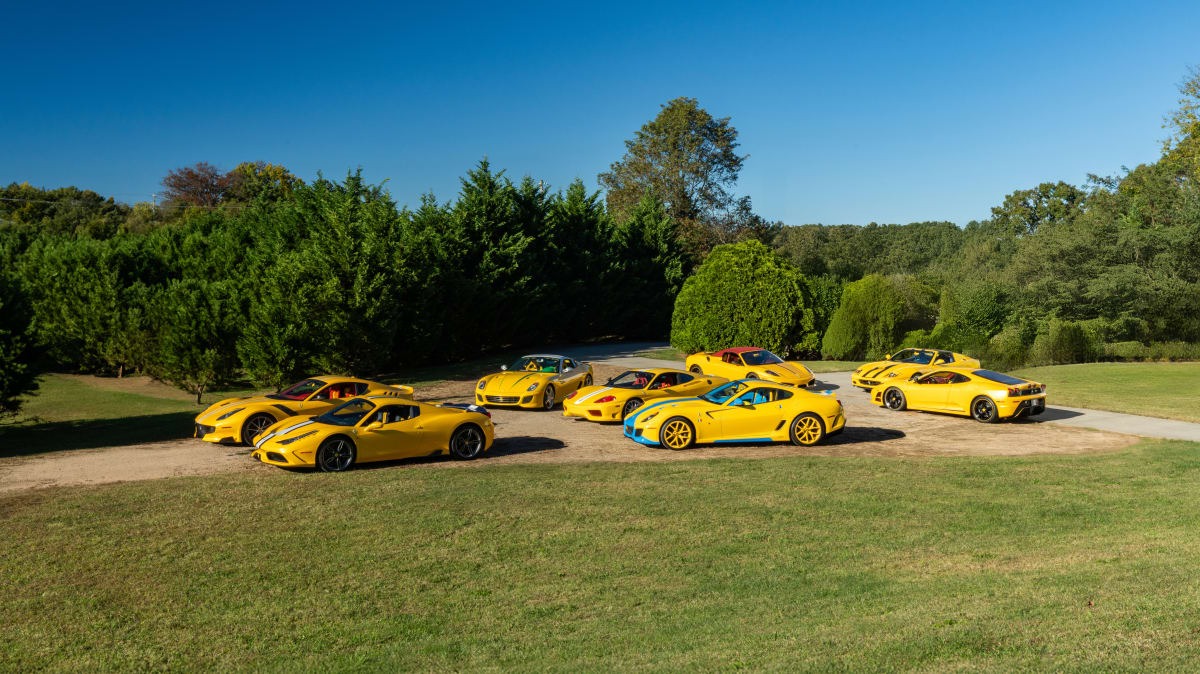
The yellow 308 became part of the Bachman family immediately. It rushed Martha to the hospital to deliver their son, P.B.
The family welcomed that car into their garage with no intent ever to sell. That philosophy shaped every future Ferrari relationship. Once a car joined the collection, it stayed.
Bachman developed two key criteria for acquisitions: low miles and final production examples. The final production car best reflects the series, he believed.
That preference required patience and discipline. He often waited years to secure the last car of any model he desired.
Ferrari leadership recognized his status and reserved final production slots whenever possible.
The collection leans heavily into supercars. A 1985 Ferrari 288 GTO, one of 272 built. Two U.S. specification 1992 F40s, each one of 60.
A 1995 F50, one of 55 for the U.S. market. A 2003 Enzo in yellow, one of 400.
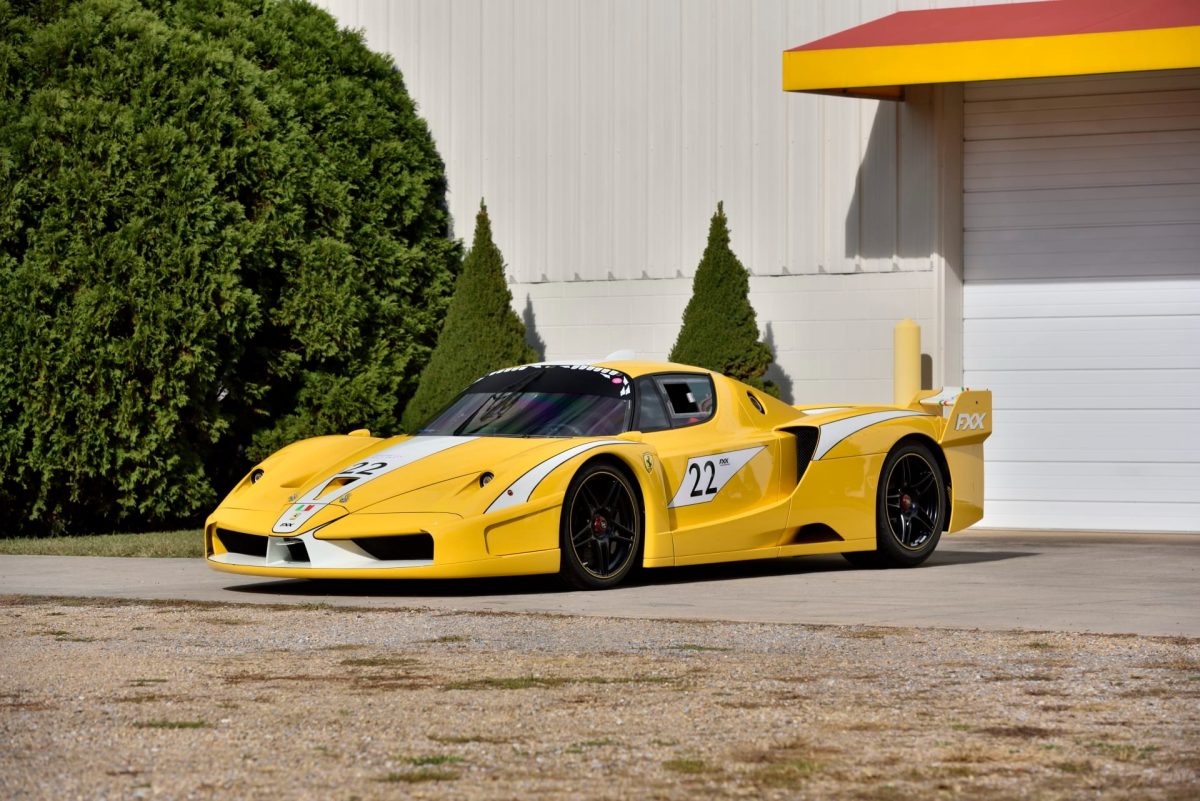
A LaFerrari and LaFerrari Aperta, both yellow and denoted by the factory as the last U.S. versions produced. Even a 2006 track-only FXX, one of just 30 built.
The FXX holds special significance. Bachman received the only original yellow FXX ever produced by Ferrari.
Several were later repainted yellow during EVO upgrades, but his remains the sole example that left the factory in original yellow livery. Following the EVO upgrade, it recorded just 2,318 kilometers.
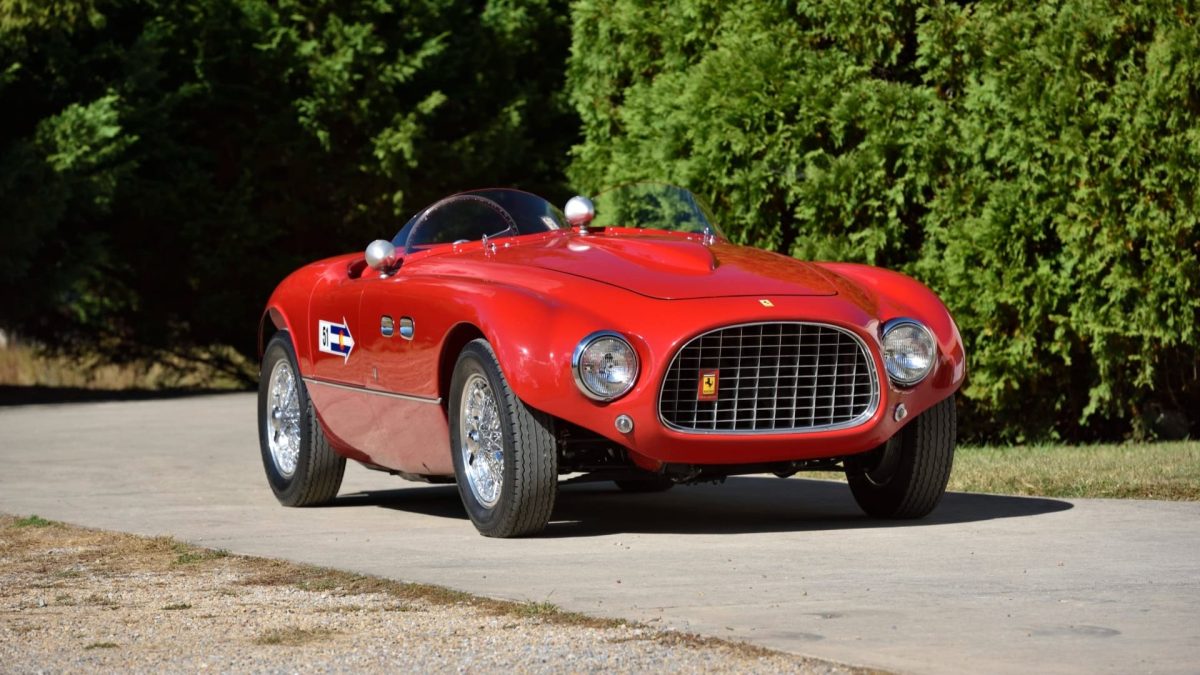
Front-engine V12 models span 1953 through 2017. The 1953 Ferrari 166 MM/53 Vignale Spyder is the final of six built with a Vignale body.
A 1964 Ferrari 250 GT/L Berlinetta Lusso, one of 350. A 1967 Ferrari 275 GTB/4, one of reportedly 16 alloy-bodied examples.
Three 365 GTB/4 Daytonas including an early example with full-length plexiglass nose.
Contemporary models include a 2001 Ferrari 550 Barchetta, two 2005 Ferrari 575M Superamericas, a 599 GTO, a 599 SA Aperta, and a 2017 F12tdf.
The collection also includes 3-Series Ferraris from Vetroresina 308s to the 458. Flat-12 Ferraris like the Boxer and Testarossa appear, including two 1984 512 BBi models.
One was ninth-to-last of 1,007 made. The other wears the last serial number of the run. Two Dinos joined the sanctuary despite never officially wearing Ferrari badges.
Several notable cars received comprehensive restorations by renowned David Carte.
The 1967 Ferrari 275 GTB/4, the 246 GTS Chairs and Flares, and the 1964 Ferrari 250 GT/L Berlinetta Lusso all underwent meticulous work to the highest concours standards.
Bachman preferred preservation over driving. He sought only the lowest-mile examples, often passing on cars he wanted most while waiting for something even better.
The collection represents one of the most well-preserved and lowest-mile contemporary Ferrari collections anywhere.
The cars collectively earned awards, honors, and trophies at judged concours events.
Most won at least Platinum awards from the Ferrari Club of America, the highest class-level recognition for well-maintained examples.
Presented in collaboration with Christopher Miele of Prancing Horse of Nashville, this represents a once-in-a-generation opportunity.
These vehicles spent decades in private hands. Their public auction marks the end of one era and the beginning of another.