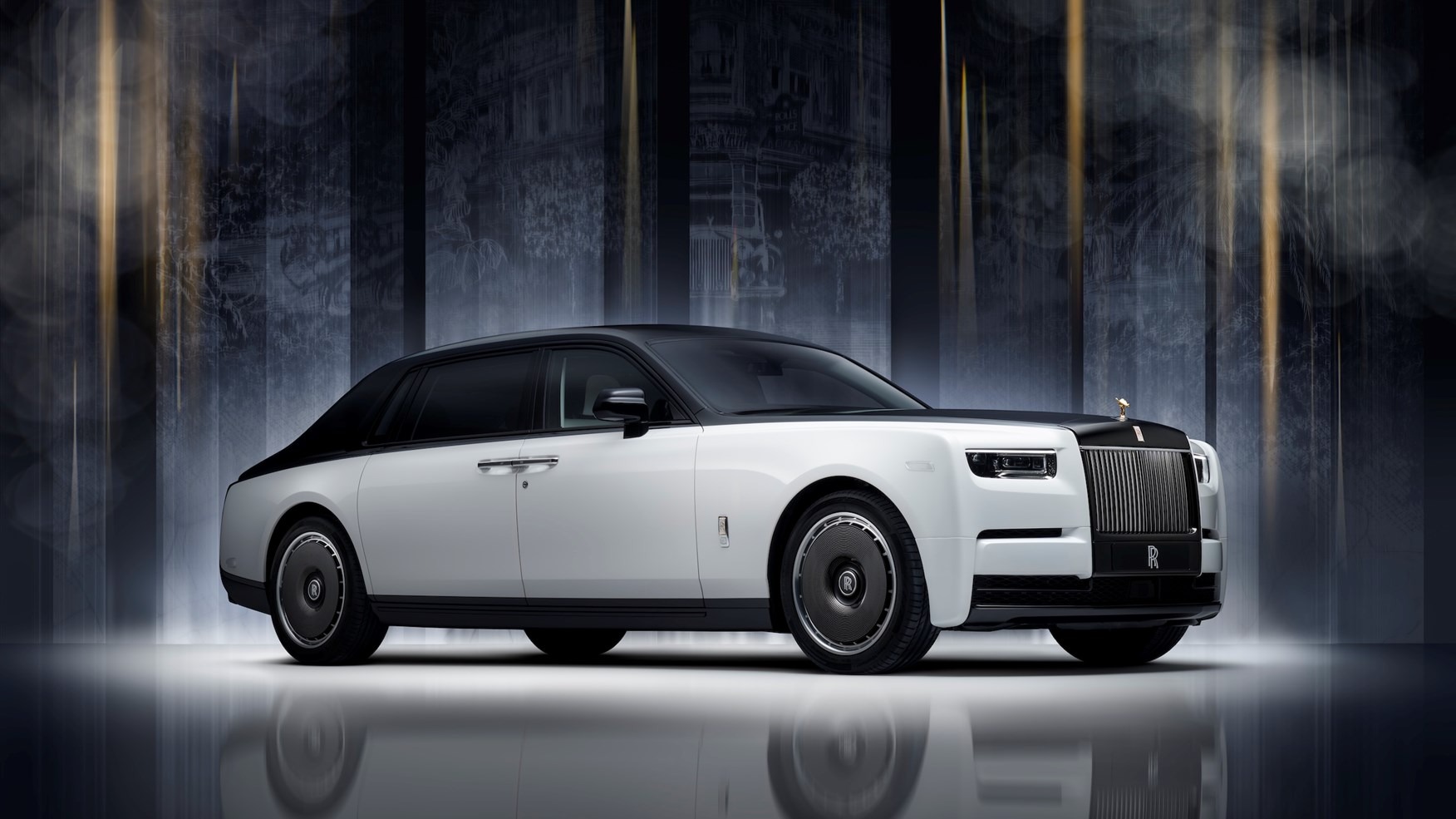
Something very special just dropped from Rolls-Royce. The Phantom Centenary marks 100 years of the iconic nameplate with just 25 examples, and if you were thinking of buying one, don’t bother. They’re already all sold.
The company spent three and a half years researching, designing, and hand-crafting what might be the most intricate Private Collection ever made.
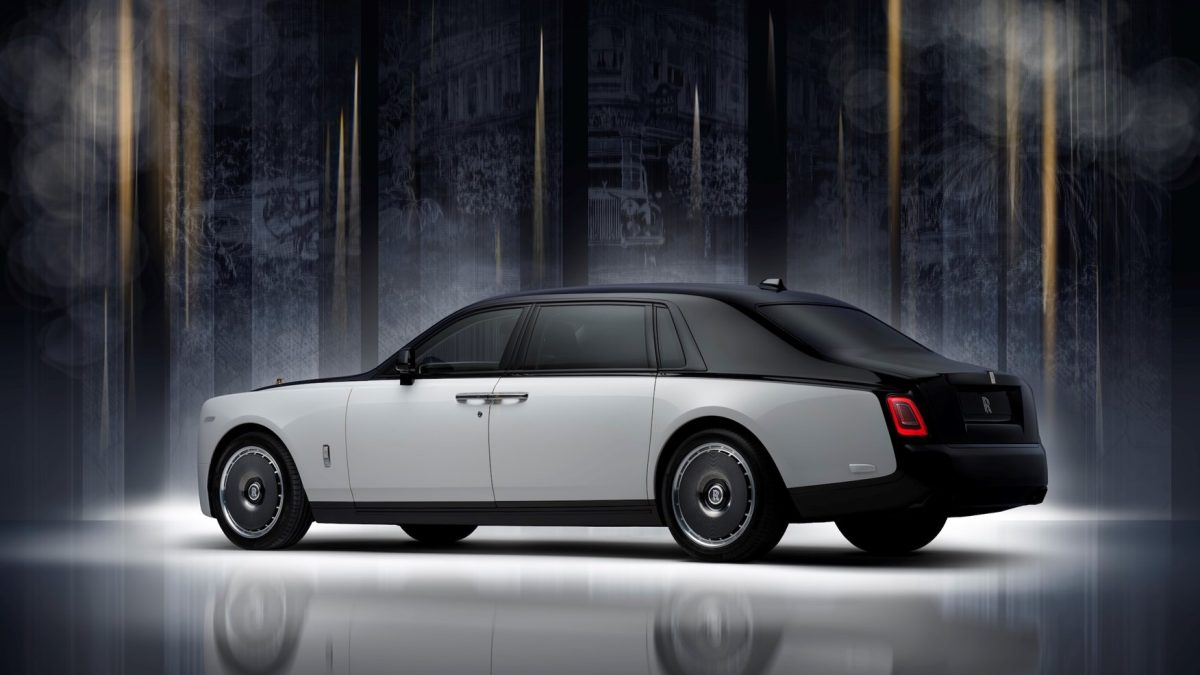
The exterior wears a two-tone paint scheme. Super Champagne Crystal over Arctic White on the side body, flowing into Super Champagne Crystal over Black up top. The design nods to 1930s Phantom silhouettes.
Crushed glass particles in the clear coat give it a metallic shimmer effect. An 18-carat gold Spirit of Ecstasy sits at the nose, plated in 24-carat gold and hallmarked.
The wheels carry disc designs engraved with 25 lines each. That’s one line for each car in the collection. Together they make 100 lines for the centenary.
The real story happens inside. Opening the rear coach doors reveals seats inspired by the 1926 Phantom of Love. The artwork unfolds across three distinct layers.
The background shows places and artifacts from Phantom history, including the original Conduit Street headquarters in Mayfair and Henry Royce’s oil paintings of Southern France.
The second layer portrays great Phantoms from the past in detailed drawings. The third layer uses embroidery to abstractly represent seven significant owners from every generation of Phantom.
The finished artwork spans over 45 individual panels, each aligned and fitted around seat curvatures using techniques inspired by Savile Row tailoring. It took 160,000 stitches total.
Bespoke designer Katrin Lehmann explained they drew on original texts, diaries, photographs and paintings to weave together many threads of Phantom history.
New technology, including 3D ink layering, allowed details as small as 0.13 millimeters in height, from boats sailing across seas to location names on maps.
The doors tell geographical stories too. Rear doors show the coastline of Le Rayol-Canadel-sur-Mer where Henry Royce spent winters.
The front passenger door displays West Wittering, his summer residence. The driver’s door depicts the 4,500-mile journey of the first Goodwood-era Phantom crossing Australia from Perth.
Front seats are laser-etched leather based on hand-drawn heritage images.
Look closely and you’ll spot a rabbit referencing Roger Rabbit, the codename given to the Rolls-Royce project after BMW took over the brand.
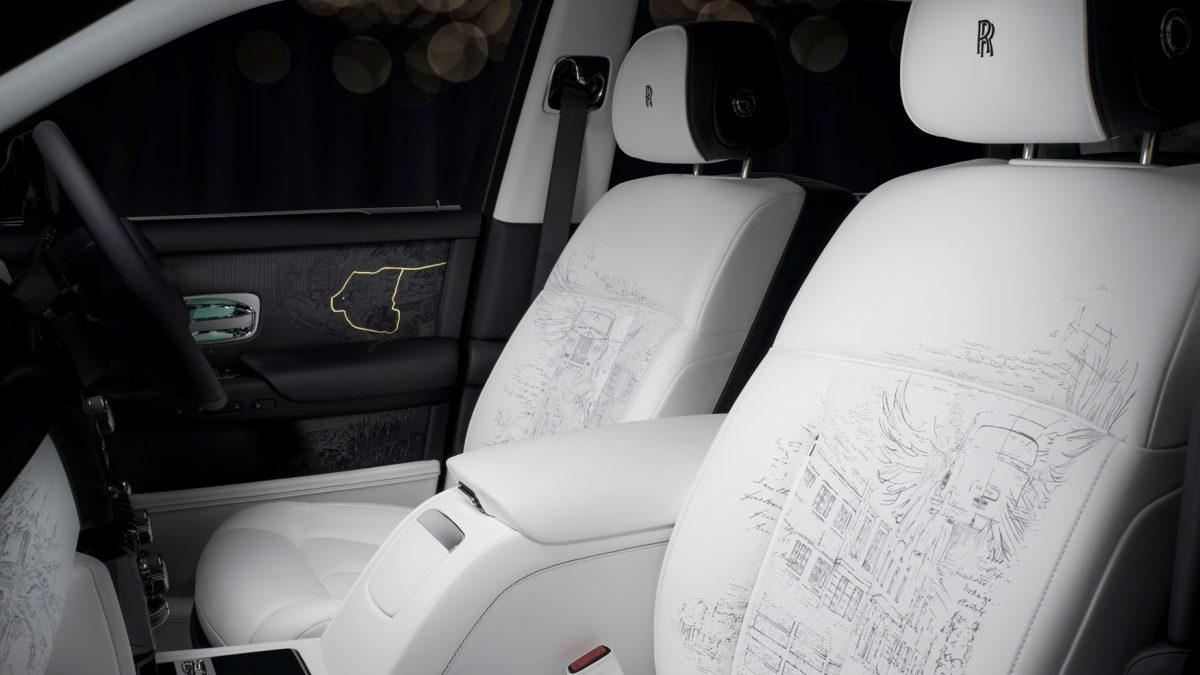
There’s a seagull representing the codename for the 1923 prototype of the first Phantom. A mulberry tree from Henry Royce’s garden appears alongside honey bees from the apiary at Goodwood.
The woodwork uses stained Blackwood with door panels featuring geographical maps, winding routes, sweeping landscapes and floral elements.
Three crafting techniques made their Rolls-Royce debut here. They include 3D marquetry with raised motifs, 3D ink layering for fine textures, and 24-carat gold leafing taught by nearby West Dean College.
The Starlight Headliner combines LEDs with 440,000 stitches of embroidery. Ahead of the front passenger sits 50 brushed aluminum fins created by 3D printing, meant to look like pages of a book.
They’re etched with praise from 100 years of Phantom road tests and lit to evoke falling fireworks.
Phil Fabre de la Grange, head of bespoke at Rolls-Royce, said this project uses new techniques to blend metal, wood, paint, fabric, leather and embroidery into one stunning composition. The surfaces read like a book revealing 100 years of history.