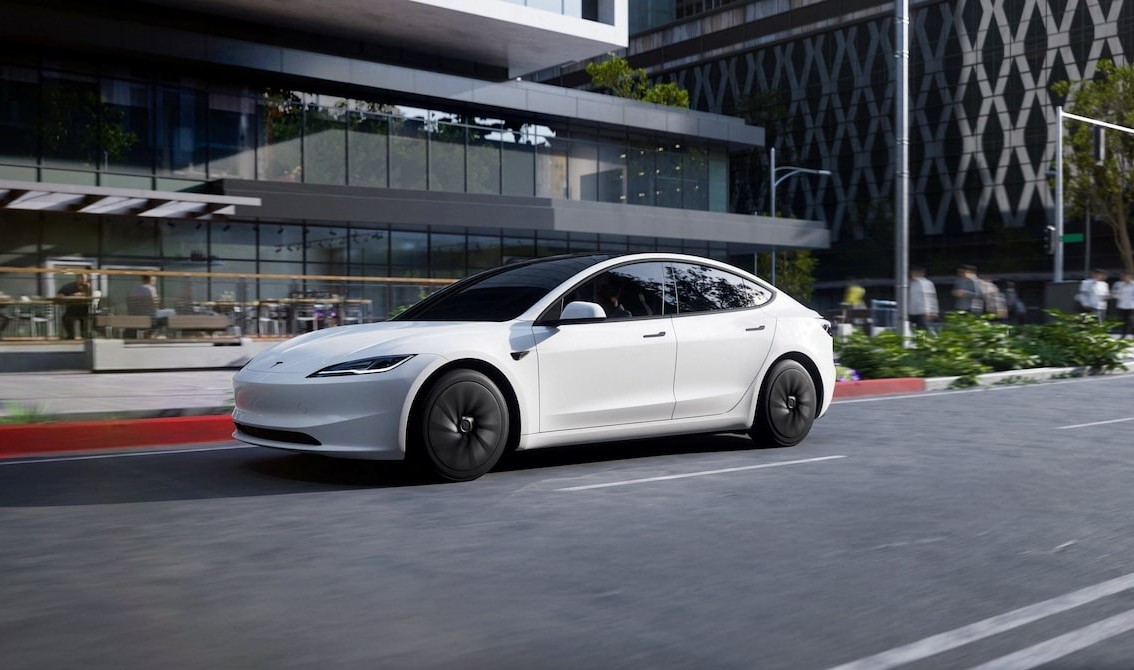
Tesla just introduced its cheapest Model Y yet, starting at $41,630 including destination and mandatory $250 order fee.
The new Standard trim undercuts the previous base model by $5,000 through strategic feature deletions rather than fundamental redesign.
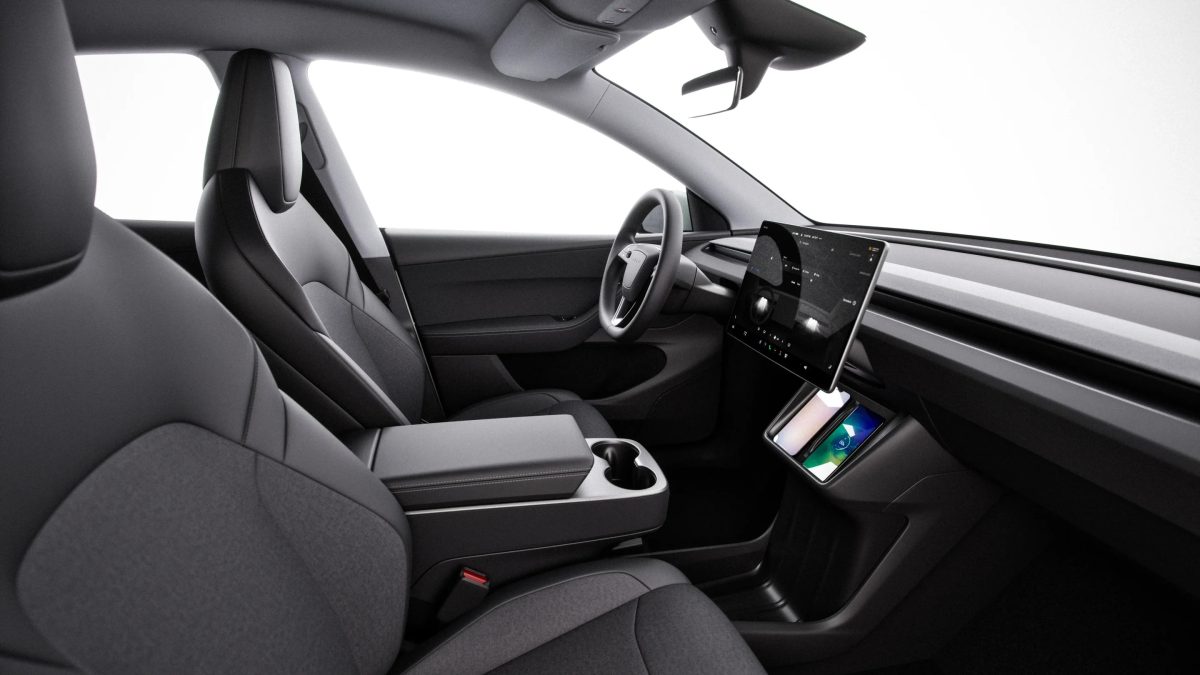
Gone are the panoramic glass roof visibility, leather seats, and front light bars. Tesla swapped in metal roof with fabric upholstery and simplified lighting.
The glass roof actually remains installed underneath a new headliner with sound-absorbing material, apparently because engineering a proper metal roof would cost more than leaving the glass in place and covering it up.
That logic might baffle some buyers who wanted the glass roof gone for heat reduction rather than aesthetics.
Others who requested retractable shades get permanent fabric instead, which seems like misreading customer feedback entirely.
Comfort features took hits too. The steering wheel adjusts manually instead of electrically. Front seat ventilation disappeared. Heated rear seats got axed.
The 8-inch rear touchscreen vanished though the 15.4-inch central screen remains up front doubling as both instrument cluster and infotainment hub.
The Model Y Standard rides on 18-inch wheels with 19 19-inch upgrade available for $1,500. Paint choices shrink to three basic colors: Stealth Grey included, Pearl White for $1,000, and Diamond Black for $1,500.
Optional extras include tow hitch rated for 3,500 pounds at $1,000, Full Self Driving Supervised for $8,000, and high-speed home charger at $450 adding roughly 44 miles of range per hour.
Performance specs show 321 miles of estimated range from the slightly smaller 69.5-kilowatt-hour battery. The single rear-mounted electric motor produces 300 horsepower, hitting 60 mph in 6.8 seconds.
By comparison, the Model Y Long Range offers 357 miles and reaches 60 mph in 5.7 seconds, so the difference isn’t dramatic.
Even maxing out all optional upgrades, excluding dealer-installed accessories, the Model Y Standard tops out at $53,630. That’s still significantly less than the Model Y Performance starting near $60,000.
Tesla simultaneously introduced Model 3 Standard at $33,490, creating entry level trim across both volume models. The company reshuffled existing lineups, renaming mid range Long Range variants as Premium while Performance flagships remain unchanged at the top.
Both Standard models use single motor rear wheel drive setup with smaller 69 kWh battery packs containing one fewer module than usual.
The stripped-down approach targets buyers prioritizing affordability over features, though whether removing ventilated seats and heated rear seats qualifies as reasonable economy measures remains debatable.
The middle section of the Model Y Standard’s lightbar vanished, arguably an improvement by accident. The front bumper got simplified with revised air inlets and lighting elements now integrated into headlamps.
The rear drops the Juniper’s trademark connecting center strip between taillights.
Inside, vegan leather seats switched to textile inserts. The center console features large open compartment reminiscent of Cybertruck’s utilitarian layout.
Front seat ventilation and rear seat heating disappeared alongside the rear passenger screen, replaced by manual vents.
New smaller 18-inch wheels come standard with simplified wheel covers that won’t win style awards but should improve ride comfort through extra tire sidewall.
Everything else about the Model Y experience remains unchanged from steering stalks to touchscreen interface dominating the dashboard.
This isn’t the long-promised sub $30,000 Tesla, but the Model Y Standard represents genuine price reduction through feature deletion rather than manufacturing innovation.
Whether buyers accept fabric seats and manual steering adjustment to save $5,000 depends on individual priorities and budget constraints.