American startup Vittori has revealed its first hypercar at Florida’s Concours Club, and its use of AI in the design process may come as a refreshing surprise. The Turbio combines artificial intelligence-assisted design with Pininfarina engineering expertise, creating a 1,110-horsepower hybrid limited to just 50 examples at $2.5 million each.
Founded last year, Vittori specializes in merging AI design tools with race-bred engineering. The company tapped legendary Italian design house Pininfarina to handle development, manufacturing, and production. By managing both design and engineering simultaneously, Pininfarina accelerated the entire process using virtual reality instead of physical style models.
The naturally aspirated 6.8-liter V12 hybrid comes from Italian engineering firm Italtecnica, with a single electric motor on the front axle producing a combined output of 1,110 horsepower. Zero to 62 mph arrives in an estimated 2.5 seconds, matching rivals like the Ferrari SF90 and Koenigsegg Jesko.
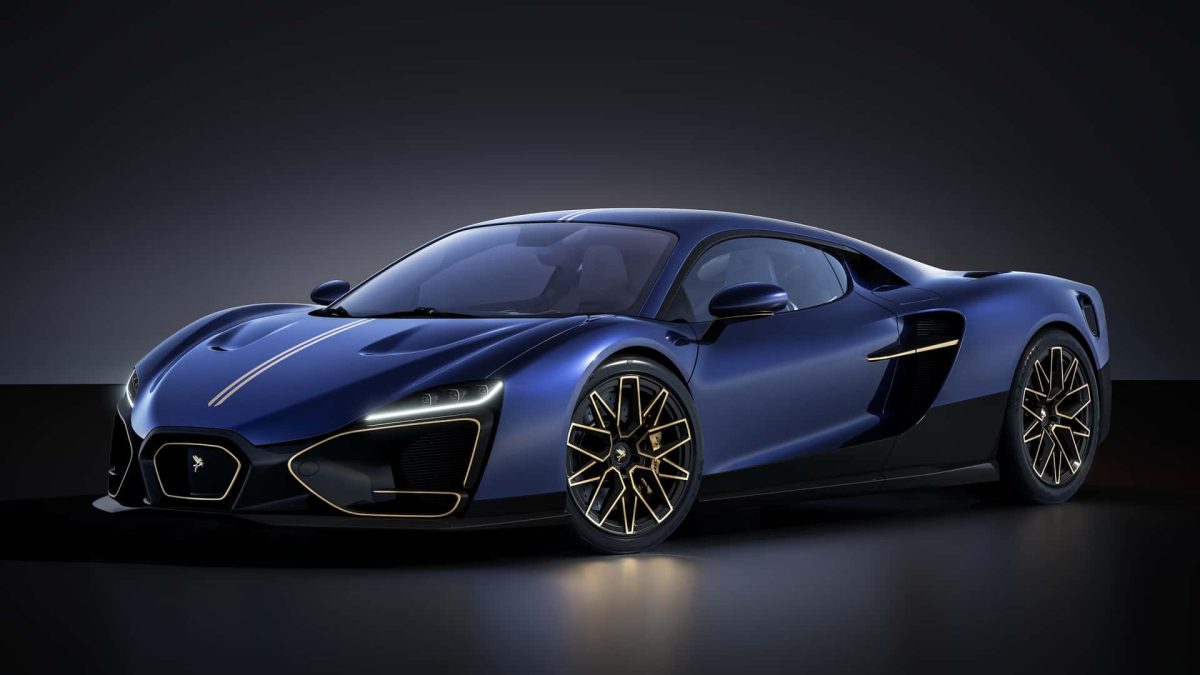
AI and 3D printing enable surfaces where every curve serves specific aerodynamic purposes, channeling air or creating stability. The seamless body generates downforce without disrupting clean design lines. Titanium 3D printed exhausts manage heat and optimize flow.
The active rear wing remains fully retracted on straights to reduce drag, deploys completely when braking for stability, and adjusts tilt angle during cornering to generate downforce. Illuminated accents around headlights, wheels, and doors highlight the night sky blue body’s aesthetic.
Inside, sumptuous leatherwork combines with digital screens, analog clock, and physical knobs, dials, and switches. The old school approach prioritizes mechanical engagement over touchscreen everything interiors plaguing modern cars.
CEO Carlos Cruz describes the goal as building something that feels like flight, sculpture, and power without compromise. Giuseppe Bonollo, SVP of Mobility for Pininfarina, notes the virtual reality development process achieved perfect synthesis between form and aerodynamic functionality.
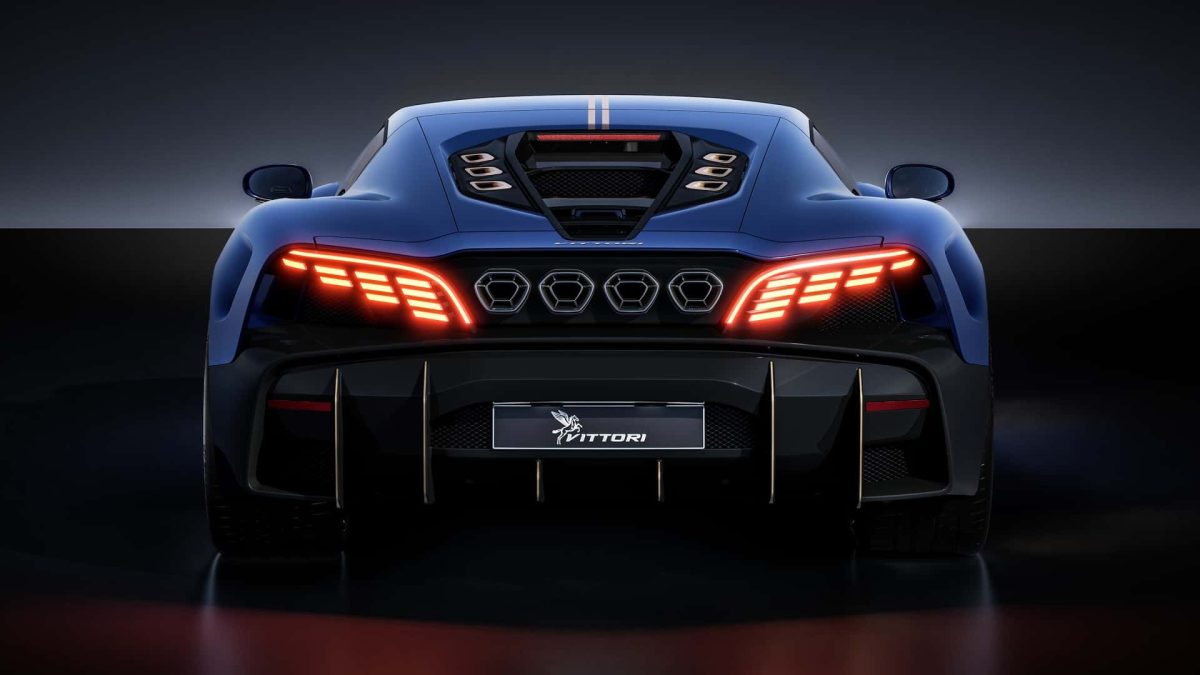
The design shows shades of McLaren GT DNA, particularly the front end and overall profile. A hexagonal grille with large side vents sits below ultra-slim headlights. The busier rear features dramatic angular taillights surrounding quad exhaust tips with massive diffuser and bronze accents.
First fully homologated production units begin deliveries in Q4 2027. The running prototype confirms Vittori sits closer to production reality than typical vaporware hypercar startups. Italian manufacturing facilities will build all 50 examples starting next year.
Whether AI assistance proves beneficial or gimmicky remains debatable, but the Turbio looks surprisingly cohesive for a startup’s first attempt. Pininfarina’s involvement provides crucial credibility that pure AI design couldn’t achieve alone.